City of light – a practical introduction to the city of Athens


City of light – a practical introduction to the city of Athens
Houseplants are among the most popular home decorations. They are found in almost every room, from the living room and kitchen to the bedroom, bathroom and even the home office. Whether you prefer a romantic corner, a more minimalist style, or simply want plants that thrive in the shade.
In this article you will find a description of what you need to know before buying houseplants, what types exist and how you can combine them so that your home exudes a sense of nature as a work of art.
The article presents a selection of houseplants that represent different forms of growth, colours and uses. The aim is to provide a broad picture of the characteristics and parameters you need to consider when choosing houseplants for your home. The information for each plant is based on data from growers and experts and is intended to provide a comprehensive and clear description.
Things to consider before buying houseplants
When choosing houseplants, it is important to consider the position, light and humidity of the room. Here are some tips from the most important factors you need to consider.
1. Light conditions
Houseplants respond differently depending on the amount of light. For example, as the brightness and exposure increase, they need more or less light, while, as with shade and ferns, they prefer shade. Evaluate where the light conditions of your home are before choosing plants.
2. Type of soil and humidity
Houseplants have different soil requirements. Some prefer sandy soil, while others thrive in clay soil, as with ferns, which prefer moist soil. The right choice of soil mix can help houseplants grow better.
3. Period of flowering
To enjoy a flowering plant all season, it is a good idea to combine houseplants with different flowering periods. For example, as the gardener can combine with spring flowers such as hyacinths and daffodils, as with the autumn of the chrysanthemum.
4. Height and shape of growth
Houseplants vary from small plants such as succulents to tall trees. Choose the height and shape of the plants so that they fit harmoniously and beautifully in the room. The tall plants are usually placed in the back, while the small ones decorate the front.
5. Combination
The right combination of houseplants can create a beautiful front, but sometimes it is necessary to be arranged or placed periodically to maintain their vitality. Choose how often you want to refresh your home decor when choosing plants.
Products in focus
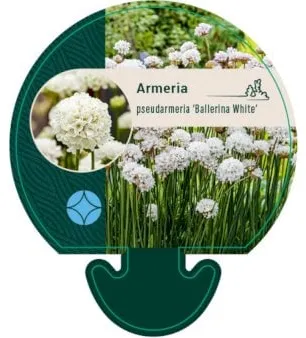
English Grass, botanically known as Armeria pseudarmeria 'Ballarina White', is a compact and tuft-forming perennial plant that produces dense tufts of narrow, velvety green leaves. It produces spherical flower heads on long stems, which emerge from the dense foliage.
The plant prefers sunny and warm locations, typical of the Mediterranean region, and thrives well in full sun. It is fully hardy and tolerates light frost, making it ideal for coastal areas and rocky gardens.
With a height of 20–40 cm and a width of 10–30 cm, English Grass fits well in the foreground of borders, in rock gardens or as a potted plant. It can also be used in lawns, where the compact growth form offers a uniform and well-defined appearance.
- Location: Full sun from May–June.
- Growth form: Forms tufts and has a compact growth form.
- Soil: Thrives well in full sun.
- Use: Ideal for borders, rock gardens and parks.
- Hardiness: Fully hardy and easy to grow.
Pros and cons
- Suitable for borders and hardy perennial beds
- Compact growth form ideal for small gardens and borders
- Good period of flowering and colour
- Hardy perennial with white flowers
- Requires regular watering during the growing season
- May need division every few years to maintain compact growth
Pros and cons
Pros
- Suitable for borders and hardy perennial beds
- Compact growth form ideal for small gardens and borders
- Good period of flowering and colour
- Hardy perennial with white flowers
Cons
- Requires regular watering during the growing season
- May need division every few years to maintain compact growth
Pros
- Suitable for borders and hardy perennial beds
- Compact growth form ideal for small gardens and borders
- Good period of flowering and colour
- Hardy perennial with white flowers
Cons
- Requires regular watering during the growing season
- May need division every few years to maintain compact growth
Specifications
- Botanical name: Armeria pseudarmeria 'Ballarina White'
- Category: Perennial plant
- Plant category: Perennial plant
- Subcategory: English Grass
- Flower colour: White
- Flowering period: May, June (May–June)
- Flower shape: Spherical, globular
- Flower texture: Velvety
- Height: 20–40 cm
- Width: 10–30 cm
- Flowering height: 35–50 cm
- Growth form: Forms tufts
- Location: Sunny
- Soil: Light
- Use: Borders
- Leaf colour: Green
- Hardiness: Hardy
- Use: Borders, rock gardens and parks
- Planting distance: 1–5
- Plant height: 1–5, 2–4
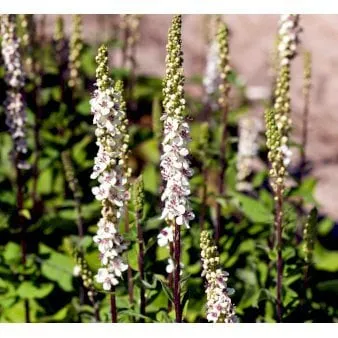
The Dark Mullein (Verbascum nigrum 'Album') is a perennial plant that is characterised by its upright growth and light flowers, which originate from July to September. The plant can reach a height of 80 to 200 cm. It thrives best in sunny locations and forms a dense, compact clump in the garden.
The flowers are white and showy, and the plant thrives best in full sun, where it can be seen at its best. It is particularly well suited for natural and medium-sized planting. The Dark Mullein is also very hardy and ideal for the Danish climate.
This perennial is suitable for beds and parks, where it can be planted in groups or in areas with a planting distance of 45–60 cm. It combines well with other perennial plants and provides both height and physical presence in the planting.
- Flowering period: July to September with light flowers.
- Growth form: Upright and medium-sized perennial plant.
- Location: Thrives best in full sun and well-drained soil.
- Height: Typically 80–200 cm. thrives best in sunny locations.
- Use: Suitable for beds and parks as a feature plant.
Pros and cons
- Hardy and very easy-to-grow perennial plant
- Attractive flowering period that attracts bees and other pollinators
- Suitable for naturalistic plantings
- Provides height and structure in borders
- Requires sunny location for best flowering
- May self-seed in suitable conditions or in areas with loose soil
Pros and cons
Pros
- Hardy and very easy-to-grow perennial plant
- Attractive flowering period that attracts bees and other pollinators
- Suitable for naturalistic plantings
- Provides height and structure in borders
Cons
- Requires sunny location for best flowering
- May self-seed in suitable conditions or in areas with loose soil
Pros
- Hardy and very easy-to-grow perennial plant
- Attractive flowering period that attracts bees and other pollinators
- Suitable for naturalistic plantings
- Provides height and structure in borders
Cons
- Requires sunny location for best flowering
- May self-seed in suitable conditions or in areas with loose soil
Specifications
- Botanical name: Verbascum nigrum 'Album'
- Plant category: Perennial
- Plant type: Perennial plant
- Genus: Verbascum
- Flower colour: Light
- Flowering period: July–September
- Flower shape: White
- Flower size: Showy
- Height: 80–200 cm.
- Width: 30–50 cm.
- Location: Full sun
- Growth form: Upright
- Planting distance: 45–60 cm.
- Pot size: Medium
- Use: Beds and parks
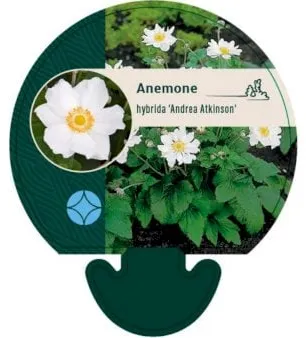
The Japanese anemone 'Andrea Atkinson' is a perennial plant that produces compact white flowers on tall stems. The flowers emerge from buds, dark green foliage and have a bright and airy character in the garden.
The plant blooms from August to October and offers colour and structure to the borders of the garden. It thrives best in sun or partial shade, rich in humus and in well-drained, moist soil.
The perennial reaches up to 90 cm in height and spreads easily with underground rhizomes, making it a perfect choice for the natural planting of smaller garden areas. It can be used as a solitary plant or in groups and is ideal for flower beds.
With proper care, it can form a dense and beautiful mass of flowers in the garden of perennials.
- Flowering period: August to October with large white flowers.
- Growing conditions: Thrives in sun or partial shade and in well-drained, moist soil.
- Height: Up to 90 cm with a striking flower form.
- Planting density: About 6 plants per square metre.
- Ideal for garden beds: Provides impressive autumn flowers for flower beds.
Pros and cons
- Long flowering period in late summer
- Large, distinctive white flowers
- Ideal both for borders and for garden beds
- Can attract beneficial insects with its pollen
- Requires well-drained soil to prevent root rot
- Can spread if the growing conditions are very favourable
Pros and cons
Pros
- Long flowering period in late summer
- Large, distinctive white flowers
- Ideal both for borders and for garden beds
- Can attract beneficial insects with its pollen
Cons
- Requires well-drained soil to prevent root rot
- Can spread if the growing conditions are very favourable
Pros
- Long flowering period in late summer
- Large, distinctive white flowers
- Ideal both for borders and for garden beds
- Can attract beneficial insects with its pollen
Cons
- Requires well-drained soil to prevent root rot
- Can spread if the growing conditions are very favourable
Specifications
- Botanical name: Anemone x hybrida 'Andrea Atkinson'
- Plant height: 50–100 cm (typically around 90 cm)
- Width: 30–50 cm
- Flower colour: White
- Flowering period: August–October
- Location: Sun / partial shade
- Flower form: Single
- Flowering: Medium
- Flower shape: Almost round to cup-shaped
- Flower texture: Smooth
- Planting density: 6 plants per m²
- Planting height: around 45 cm
- Plant type: Perennial
- Garden use: No
- Pot size: Medium
- Category: Perennial / Anemone
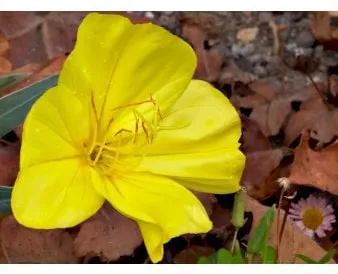
The Creeping Evening Primrose (Oenothera macrocarpa) is a low, cushion-forming perennial that reaches a height of 15–30 cm and spreads widely in the bed. It has large, bright yellow flowers with cup-shaped petals and a pleasant fragrance, making it ideal as a ground cover or border plant.
The plant thrives best in full sun with well-drained soil. It grows in dry conditions and tolerates light frost once established. For optimal flowering, the flowering period is 4–6 flowers per square metre.
The plant originates from the United States, from the region of Missouri to the Midwest, where it grows in large, sunny areas that are often dry during the summer. The plants produce night-blooming flowers and other pollination-friendly features, contributing to a vibrant garden bed.
The Creeping Evening Primrose is ideal for rock gardens, beds and sunny edges, where the plant and its flowers form a beautiful carpet of colour along the garden's surface.
- Low perennial plant: Forms dense cushions and is ideal as a ground cover.
- Large flowering period: Large, yellow flowers from June to September.
- Thrives in sun and dry conditions: Grows well in full sun and well-drained soil.
- Attractive to pollinators: Produces night-blooming flowers and other pollination-friendly features.
- Ideal for rock gardens: Thrives well in sunny and dry garden beds.
Pros and cons
- Large flowering period with large, yellow flowers
- Beautiful combination and aesthetic in the garden
- Attractive to pollinators
- Ideal for rock gardens and sunny beds
- Requires well-drained soil to avoid rot
- The plant is short-lived, but self-seeds easily
Pros and cons
Pros
- Large flowering period with large, yellow flowers
- Beautiful combination and aesthetic in the garden
- Attractive to pollinators
- Ideal for rock gardens and sunny beds
Cons
- Requires well-drained soil to avoid rot
- The plant is short-lived, but self-seeds easily
Pros
- Large flowering period with large, yellow flowers
- Beautiful combination and aesthetic in the garden
- Attractive to pollinators
- Ideal for rock gardens and sunny beds
Cons
- Requires well-drained soil to avoid rot
- The plant is short-lived, but self-seeds easily
Specifications
- Botanical name: Oenothera macrocarpa
- Danish name: Creeping Evening Primrose
- Plant height: 15–30 cm
- Plant width: 10–20 cm
- Flowering period: 4–6 flowers per m²
- Flowering period: June–September
- Flower colour: Yellow
- Leaf colour: Green to dark green
- Growth form: Cushion-forming perennial, spreading
- Location: Full sun
- Type of soil: Well-drained
- Use: Perennial bed
- Pot size: Medium
- Category: Perennial – Evening Primrose
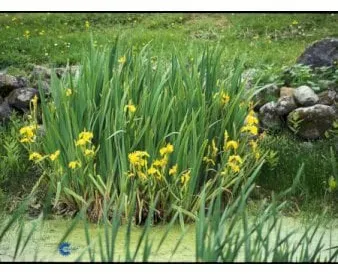
The Iris pseudacorus is a perennial plant that grows to a height of 70 to 100 cm. It develops large clumps with dark green leaves, which appear at the top during the flowering period from June to July.
The plant thrives best in full sun and grows well in moist soil, making it ideal for planting near ponds, streams or other wet areas. It can be planted directly as a water plant or in damp soils to create a natural look.
The flowers are bright and yellow, and the flowering period is from late spring to summer. The Iris pseudacorus can be used as a decorative plant, but its main value lies in its ability to provide shelter and colour to the wet areas of the garden.
- Height: 70–100 cm
- Growth habit: Large clumps with dark green leaves
- Flowering period: June–July
- Colour: Bright yellow
- Location: Sun to moist soil, e.g. near ponds or lakes
- Use: Ornamental or in beds, also as a water plant
Pros and cons
- Thrives in sun and moist soil
- Impressive clump-forming growth with dark green leaves
- Ideal for ponds and lakes
- Can be used as a water plant
- Requires moist soil and does not thrive in dry areas
- Can spread if not controlled
Pros and cons
Pros
- Thrives in sun and moist soil
- Impressive clump-forming growth with dark green leaves
- Ideal for ponds and lakes
- Can be used as a water plant
Cons
- Requires moist soil and does not thrive in dry areas
- Can spread if not controlled
Pros
- Thrives in sun and moist soil
- Impressive clump-forming growth with dark green leaves
- Ideal for ponds and lakes
- Can be used as a water plant
Cons
- Requires moist soil and does not thrive in dry areas
- Can spread if not controlled
Specifications
- Botanical name: Iris pseudacorus
- Plant height: 70–100 cm
- Growth habit: Clump-forming with dark green leaves
- Flowering period: June–July
- Colour: Bright yellow
- Location: Sun to moist soil, near ponds or lakes
- Flower shape: Upright
- Flowering time: Medium
- Flower height: Upright
- Flower shape: Upright
- Flower colour: Yellow
- Common name: Iris
- Planting distance: 35–55 cm
- Plant width: 20–40 cm
- Plant type: Perennial
- Soil: Medium
- Recommended planting: Medium
- Category: Perennial, Iris
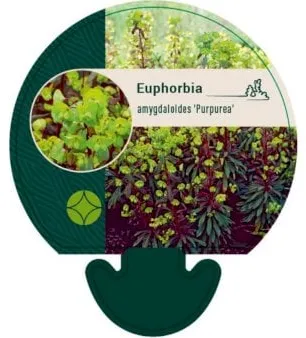
The spurge plant 'Purpurea' (Euphorbia amygdaloides 'Purpurea') is a compact, perennial plant that is characterised by its red foliage and its ability to retain colour and shape throughout the season. The plant thrives well in both shady and sunny locations, making it suitable for a wide range of garden designs. The plant is particularly suitable as a ground cover or border, where it highlights the colour of the rest of the garden.
It grows to a height of 30–50 cm and a width of 20–30 cm, making it ideal as a foreground plant or for use in mixed borders. The planting density is recommended at 5–6 plants per square metre for optimal coverage.
The plant blooms from April to June, when it produces characteristic flowers in red and green, gathered in large clusters. It is suitable for pots and can be used in arrangements.
The plant's sap is toxic and should be handled with care. The species is very hardy and adapts easily to most soil types with good drainage.
- Distinctive foliage: Red leaves that provide colour and shape in the garden throughout the season.
- Flowering: Red and green flowers from April to June.
- Location: Thrives in shady and sunny areas.
- Perennial: Retains its foliage through the seasons.
- Suitable for pots: Can be used in pots and arrangements.
Pros and cons
- Perennial and distinctive all year round
- Hardy in shady and sunny areas
- Compact growth form suitable for ground cover, ideal for border planting
- Thrives well in the season
- The plant's sap is toxic and requires careful handling
- May lose some of its colour in very sunny locations
Pros and cons
Pros
- Perennial and distinctive all year round
- Hardy in shady and sunny areas
- Compact growth form suitable for ground cover, ideal for border planting
- Thrives well in the season
Cons
- The plant's sap is toxic and requires careful handling
- May lose some of its colour in very sunny locations
Pros
- Perennial and distinctive all year round
- Hardy in shady and sunny areas
- Compact growth form suitable for ground cover, ideal for border planting
- Thrives well in the season
Cons
- The plant's sap is toxic and requires careful handling
- May lose some of its colour in very sunny locations
Specifications
- Botanical name: Euphorbia amygdaloides 'Purpurea'
- Danish name: Red spurge plant
- Category: Perennial plant
- Height: 30–50 cm
- Width: 20–30 cm
- Planting density: 5–6 plants per m²
- Flowering period: April–June
- Flower colour: Red and green
- Leaf colour: Red to reddish-green
- Light conditions: Partial shade to full sun
- Growth form: Upright
- Hardiness: Hardy
- Soil type: Well-drained
- Location: Beds, parks and borders
- Recommended planting distance: Medium
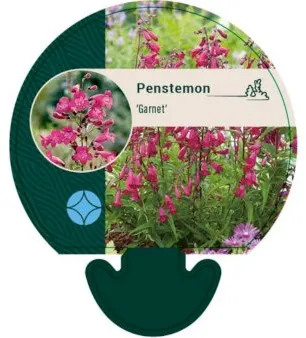
Penstemon 'Garnet' is a perennial plant characterised by its dark red tubular flowers and glossy foliage, a typical feature of the genus Penstemon. The plant has long, glossy leaves and attracts pollinators such as bees and butterflies.
It thrives best in full sun and prefers well-drained soil. With a height of 70–80 cm and a width of 20–30 cm, it fits well in perennial flower beds, where it can provide height and visual interest.
The Beardtongue can be used both in beds and parks as well as in borders. It is hardy and ideal for cutting, making it suitable as a common perennial in bouquets.
The plant has a medium flowering period and requires moderate watering to maintain healthy growth throughout the season.
- Flower colour: Dark red tubular flowers that provide a striking visual effect in the garden.
- Flower shape: Tubular and medium-sized flowers, ideal for beds and borders.
- Location: Thrives best in full sun and well-drained soil.
- Hardiness: Hardy and ideal for the Danish climate.
- Use: Can be used as a common perennial and in decorative plantings.
Pros and cons
- Long flowering period that attracts pollinators
- Ideal for beds, parks and borders
- Hardy and withstands Danish winters
- Can be used as a common perennial
- Requires sunny location for best flowering
- Needs regular watering to maintain vitality
Pros and cons
Pros
- Long flowering period that attracts pollinators
- Ideal for beds, parks and borders
- Hardy and withstands Danish winters
- Can be used as a common perennial
Cons
- Requires sunny location for best flowering
- Needs regular watering to maintain vitality
Pros
- Long flowering period that attracts pollinators
- Ideal for beds, parks and borders
- Hardy and withstands Danish winters
- Can be used as a common perennial
Cons
- Requires sunny location for best flowering
- Needs regular watering to maintain vitality
Specifications
- Botanical name: Penstemon 'Garnet'
- Category: Perennial plant
- Plant category: Perennial plant
- Type: Plant
- Flowering period: Summer (July–August)
- Flower colour: Dark red
- Flower shape: Tubular, bell-shaped
- Flower size: Medium
- Flower shape: Tubular
- Height: 70–80 cm (can vary 50–100 cm)
- Width: 20–30 cm
- Planting distance: 45–50 cm
- Location: Full sun
- Hardiness: Hardy
- Flowering: Medium flowering period
- Watering: Moderate watering
- Soil type: Loamy
- Use: Beds, parks and borders
- Cutting: Ideal as a common perennial
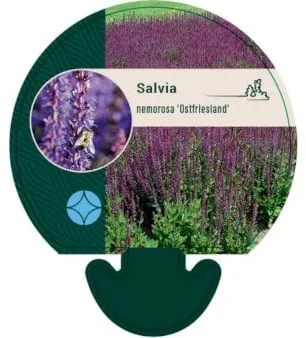
The Perennial Sage (Salvia nemorosa 'Ostfriesland') is a perennial plant that produces upright spikes of blue-purple flowers. It grows up to 40 cm in height and is ideal for borders, where it can provide colour and structure throughout the summer.
The plant thrives best in well-drained and sunny locations with good, moderately fertile soil. It grows in dense clumps and also has a pleasant fragrance. If the withered flowers are removed, the plant can bloom again later in the summer.
The Perennial Sage is ideal for pots and can be easily combined with other perennials. It has aromatic leaves and attracts many pollinators such as bees and butterflies, making it an excellent choice for wildlife-friendly gardens.
With a flowering period of 5–6 weeks from mid-summer, it forms a dense and harmonious clump. It is fully hardy and ideal for individual garden beds as well as for parks.
- Blue-purple flowers: Attracts bees and butterflies to the garden from June to August.
- Ideal for borders: Provides colour and structure with its dense and upright growth.
- Aromatic leaves: Offer a pleasant aroma and add sensory interest to the garden.
- Easy to maintain: Requires minimal care once established.
- Hardy and sun-loving: Thrives in full sun and attracts beneficial insects.
Pros and cons
- Attracts pollinators such as bees and butterflies
- Provides colour and structure with dense and upright growth
- Ideal for pots and borders
- Aromatic and hardy plant
- Hardy and easy to grow in sunny garden areas
- Requires sunny location for best flowering
- Withered flowers should be removed to encourage new blooms
- May need division every few years to maintain vigour
Pros and cons
Pros
- Attracts pollinators such as bees and butterflies
- Provides colour and structure with dense and upright growth
- Ideal for pots and borders
- Aromatic and hardy plant
- Hardy and easy to grow in sunny garden areas
Cons
- Requires sunny location for best flowering
- Withered flowers should be removed to encourage new blooms
- May need division every few years to maintain vigour
Pros
- Attracts pollinators such as bees and butterflies
- Provides colour and structure with dense and upright growth
- Ideal for pots and borders
- Aromatic and hardy plant
- Hardy and easy to grow in sunny garden areas
Cons
- Requires sunny location for best flowering
- Withered flowers should be removed to encourage new blooms
- May need division every few years to maintain vigour
Specifications
- Botanical name: Salvia nemorosa 'Ostfriesland'
- Plant height: approx. 40 cm
- Flower colour: Blue-purple
- Pollinator period: June – August
- Location: Full sun
- Flowering period: 5–6 weeks from mid-summer
- Foliage colour: Grey-green
- Soil type: Well-drained
- Plant type: Perennial
- Use: Beds and borders, pots
- Origin: Germany
- Propagation method: Division or cuttings
- Plant spacing: 20–40 cm
- Category: Perennial, Sage
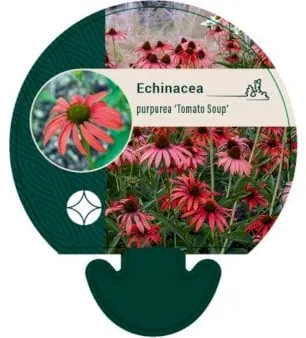
Echinacea (Echinacea 'Tomato Soup' (r)) is a perennial plant that produces a bright orange-red tone and a strong aroma in the garden. The plant grows typically 60–80 cm in height and 20–40 cm in width, making it ideal as a medium or low plant in gardens.
It blooms beautifully in full sun and can be planted with a spacing of about 40 cm to create beautiful colour areas. The flowers are 10–12 cm in diameter and bloom from July to September. The flowers are upright and long-lasting, and the plant is hardy and durable.
Echinacea is widely used in garden design and is also known for its medicinal properties. It is ideal both as an ornamental plant in gardens and as a common plant. The plant is known for its ability to attract bees and butterflies and to promote pollination.
The plant prefers well-drained soil and can withstand dry periods quite well. It is generally resistant to diseases and pests and requires minimal maintenance.
- Colour and flowering: Large orange-red flowers 10–12 cm, blooming from July to September.
- Growth form: Upright and medium growth with height 60–80 cm and width 20–40 cm.
- Location: Blooms best in full sun and well-drained soil.
- Hardiness: Fully hardy in the Danish climate.
- Use: Ideal as an ornamental plant, for pots and for attracting pollinators.
Pros and cons
- Long flowering period from July to September
- Hardy and ideal for Danish conditions
- Attracts bees and butterflies
- Ideal as a common garden plant
- Has known medicinal properties
- Does not thrive in shade and wet soil
- Requires light in sunny areas
Pros and cons
Pros
- Long flowering period from July to September
- Hardy and ideal for Danish conditions
- Attracts bees and butterflies
- Ideal as a common garden plant
- Has known medicinal properties
Cons
- Does not thrive in shade and wet soil
- Requires light in sunny areas
Pros
- Long flowering period from July to September
- Hardy and ideal for Danish conditions
- Attracts bees and butterflies
- Ideal as a common garden plant
- Has known medicinal properties
Cons
- Does not thrive in shade and wet soil
- Requires light in sunny areas
Specifications
- Botanical name: Echinacea 'Tomato Soup' (r)
- Common name: Echinacea
- Category: Perennial plant
- Height: 60–80 cm
- Width: 20–40 cm
- Flower colour: Orange-red
- Flowering period: July–September
- Flower diameter: 10–12 cm
- Flower shape: Upright
- Flower texture: Long-lasting
- Growth form: Upright
- Hardiness: Hardy
- Location: Full sun
- Planting distance: approx. 40 cm
- Hardiness: Fully hardy
- Propagation method: Division
- Ideal for pots: Yes
- Suitable for cutting: Yes
- Preferred growing conditions: Full sun and well-drained soil
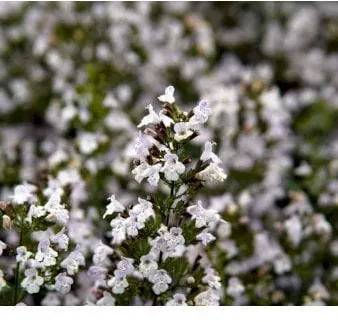
Mountain mint (Calamintha nepeta ssp. nepeta) is a low, dense perennial plant that forms dense tufts of grey-green leaves with a characteristic minty aroma. The plant reaches a height of 30–50 cm and a width of 20–40 cm, making it ideal as a border plant or as a foreground plant in flower beds and among shrubs.
It thrives best in sunny or semi-shaded positions with well-drained soil and originates from southern Europe, from Italy to the Balkans, with pinkish-blue flowers. The flowers attract many bees and butterflies and contribute to a vibrant environment in the garden and the surrounding ecosystem.
Mountain mint is hardy and can withstand light frost. It can be used both as an ornamental plant and as a culinary herb, as its aromatic leaves can be used in cooking. The flowering period usually lasts from 5–6 months, making it a long-lasting addition to any garden.
The plant is known for its ability to form a dense, fragrant carpet that suppresses weeds. It is associated with the name Thyme of the Castle and is one of the most popular perennial plants for bee-friendly gardens.
- Aromatic leaves: Emits a characteristic minty aroma.
- Long flowering period: Blooms from July to October with pinkish-blue flowers.
- Attracts pollinators: Bees and butterflies are attracted to the flowers.
- Ideal as a border plant: Forms dense tufts that suppress weeds.
- Hardy and easy to grow: Thrives in full sun and can withstand light frost.
Pros and cons
- Long flowering period from July to October
- Aromatic leaves with a minty aroma
- Attracts pollinators
- Ideal as a border plant in flower beds
- Hardy and easy to grow in the garden
- Thrives best in full sun and may become leggy in shade
- Requires well-drained soil to avoid root rot problems
Pros and cons
Pros
- Long flowering period from July to October
- Aromatic leaves with a minty aroma
- Attracts pollinators
- Ideal as a border plant in flower beds
- Hardy and easy to grow in the garden
Cons
- Thrives best in full sun and may become leggy in shade
- Requires well-drained soil to avoid root rot problems
Pros
- Long flowering period from July to October
- Aromatic leaves with a minty aroma
- Attracts pollinators
- Ideal as a border plant in flower beds
- Hardy and easy to grow in the garden
Cons
- Thrives best in full sun and may become leggy in shade
- Requires well-drained soil to avoid root rot problems
Specifications
- Botanical name: Calamintha nepeta ssp. nepeta
- Common name: Mountain mint
- Plant height: 30–50 cm
- Plant width: 20–40 cm
- Flowering period: 5–6 months per year
- Flowering period: July–October
- Flower colour: Pinkish-blue
- Leaf colour: Grey-green
- Preferred location: Full sun or partial shade
- Growth form: Upright, medium growth
- Origin: South Europe
- Hardiness: Fully hardy
- Use: Border plant, flower bed, ornamental herb
- Other names: Thyme of the Castle
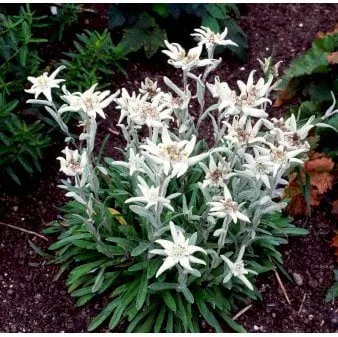
Edelweiss (Leontopodium soul. 'Alpina White') is a compact and slow-growing perennial plant, characterised by its characteristic white woolly leaves and star-shaped flowers. The plant has a natural charm in alpine environments and thrives best in full sun and well-drained soil.
It grows to about 25 cm in height and spreads to about 20–30 cm. The leaves are arranged in rosettes with a length of 2 to 5 cm and are covered with white hairs, giving them a silvery appearance. It prefers a sunny location, which makes it ideal for rock gardens or sunny borders.
Edelweiss is fully hardy and ideal for growing in alpine gardens, parks and as a border plant. It can also be used as a cut flower, as the plant’s leaves and flowers retain their shape and colour for a long time after cutting.
The plant requires light pruning, but thrives best when it has open soil and is not crowded by taller plants. It is also suitable for container planting, which other plants may find difficult to adapt to.
- Charming perennial plant: Grows to about 25 cm in height and forms dense clusters of star-shaped flowers.
- White leaves: Leaves measuring 2–5 cm form a classic alpine rosette.
- Star-shaped flowers: Typical flower shape with the characteristic star pattern.
- Hardy plant: Thrives in cold climates and requires little maintenance.
- Ideal for alpine gardens: Thrives best in full sun and well-drained soil.
Pros and cons
- Hardy and ideal for cold climates
- Beautiful structure and slow growth
- White woolly leaves with distinctive appearance
- Thrives best in full sun and well-drained soil
- May struggle to adapt to humid or shady conditions
- The slow growth means it takes time to fill larger planting areas
Pros and cons
Pros
- Hardy and ideal for cold climates
- Beautiful structure and slow growth
- White woolly leaves with distinctive appearance
- Thrives best in full sun and well-drained soil
Cons
- May struggle to adapt to humid or shady conditions
- The slow growth means it takes time to fill larger planting areas
Pros
- Hardy and ideal for cold climates
- Beautiful structure and slow growth
- White woolly leaves with distinctive appearance
- Thrives best in full sun and well-drained soil
Cons
- May struggle to adapt to humid or shady conditions
- The slow growth means it takes time to fill larger planting areas
Specifications
- Botanical name: Leontopodium soul. 'Alpina White'
- Category: Perennial plant
- Plant category: Perennial plant
- Use: Alpine gardens, borders and parks
- Growth form: Star-shaped flowers
- Growth: Slow growth
- Height: 25 cm
- Width: 20–30 cm
- Leaf colour: White
- Flower colour: White and star-shaped
- Flower shape: Star
- Flower size: Medium
- Leaf length: 2–5 cm
- Leaf width: 1–5
- Plant spacing: 35–50 cm
- Location: Full sun
- Hardiness: Fully hardy
- Soil type: Medium
- Container: Suitable
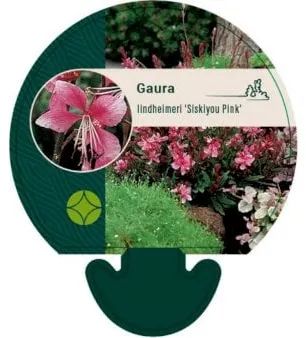
The Gaura, botanically known as Gaura lindheimeri 'Siskiyou Pink', is a perennial plant characterised by its delicate, pink-white flowers and elegant, upright growth. The plant grows to a height of 50–100 cm and a width of 30–50 cm.
The flowers are slender and elongated, resembling a butterfly in appearance and lightness. It attracts pollinators such as bees, originating from the southern United States, and the flowers bloom on long stems that sway gently in the wind.
The Gaura thrives best in sunny or partially shaded locations and prefers well-drained soil. It is ideal for planting in beds and borders, but can also be grown in pots, where it provides a beautiful and airy appearance.
The plant is moderately hardy and has a medium growth rate. It can be used as a companion plant in beds and borders, offering a delicate and graceful appearance.
The plant is moderately hardy and has a medium growth rate. It can be used as a companion plant in beds and borders, offering a delicate and graceful appearance.
- Beautiful pink-white flowers: Attracts pollinators such as bees with pink-white flowers.
- Ideal for sunny and partially shaded locations: Thrives best in well-drained soil with good drainage.
- Elegant upright growth: Provides a light and airy appearance in borders and beds.
- Can be grown as a potted plant: The long stems can be grown in pots.
- Moderate growth rate and hardiness: Requires moderate care and watering.
Pros and cons
- Beautiful pink-white flowers that attract pollinators
- Elegant and airy flower shape
- Ideal for borders and large pots
- Can be grown as a potted plant
- Moderate hardiness – may require protection in colder climates
- Prefers well-drained soil and may not thrive in heavy soil
Pros and cons
Pros
- Beautiful pink-white flowers that attract pollinators
- Elegant and airy flower shape
- Ideal for borders and large pots
- Can be grown as a potted plant
Cons
- Moderate hardiness – may require protection in colder climates
- Prefers well-drained soil and may not thrive in heavy soil
Pros
- Beautiful pink-white flowers that attract pollinators
- Elegant and airy flower shape
- Ideal for borders and large pots
- Can be grown as a potted plant
Cons
- Moderate hardiness – may require protection in colder climates
- Prefers well-drained soil and may not thrive in heavy soil
Specifications
- Botanical name: Gaura lindheimeri 'Siskiyou Pink'
- Category: Perennial plants
- Height: 50–100 cm
- Width: 30–50 cm
- Flower colour: Pink-white
- Pollinator attraction: Bees–Butterflies
- Flower shape: Slender
- Flower appearance: Elongated
- Growth form: Upright
- Location: Sun / partial shade
- Use: Beds, pots and borders
- Flowering height: 100 cm
- Flowering period: Medium
- Hardiness: Medium
- Growth: Moderate growth
- Common name: Nai
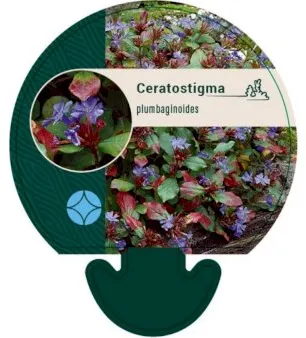
Leadwort (Ceratostigma plumbaginoides) is a perennial, beautiful ground cover plant that forms dense mats in beds, borders and parks. It typically grows up to 25 cm in height and 20–40 cm in width, making it suitable as a foreground plant or for filling gaps between other plants.
The plant thrives best in full sun and in well-drained soil with moderate fertility in neutral conditions. It is fully hardy in the Danish climate and tolerates moderate frost after establishment. Leadwort spreads with underground rhizomes and forms a dense carpet of flowers that bloom in late summer.
The leaves are blue and have a diameter of 1–5 cm. They turn red from August to September and provide a beautiful colour contrast at the end of summer. The flowers are bright and vivid, and the plant attracts pollinators from late summer, making it a valuable addition to the garden.
During flowering, it reaches a height of about 50–55 cm, including the flower stems. Leadwort is ideal for beds, parks as well as borders, where it can be used as a beautiful and uniform ground cover.
- Beautiful ground cover plant: Forms a dense carpet of blue flowers and is ideal for decorative and beautiful planting.
- Blue flowers: Blue flowers bloom from August–September and provide colour at the end of summer.
- Hardy plant: Thrives in the Danish climate and tolerates moderate frost.
- Attracts pollinators: The flowers attract pollinators from late summer.
- Ideal for sunny locations: Thrives best in full sun and well-drained soil.
Pros and cons
- Hardy and low-maintenance ground cover plant for sunny locations
- Beautiful blue flowering at the end of summer
- Beautiful colouring and good ground coverage
- Can be used in beds, borders and parks
- Requires sunny location for best flowering
- Can spread if not controlled with root barriers
Pros and cons
Pros
- Hardy and low-maintenance ground cover plant for sunny locations
- Beautiful blue flowering at the end of summer
- Beautiful colouring and good ground coverage
- Can be used in beds, borders and parks
Cons
- Requires sunny location for best flowering
- Can spread if not controlled with root barriers
Pros
- Hardy and low-maintenance ground cover plant for sunny locations
- Beautiful blue flowering at the end of summer
- Beautiful colouring and good ground coverage
- Can be used in beds, borders and parks
Cons
- Requires sunny location for best flowering
- Can spread if not controlled with root barriers
Specifications
- Botanical name: Ceratostigma plumbaginoides
- Danish name: Leadwort
- Plant height: approx. 25 cm
- Plant width: 20–40 cm
- Flower colour: Blue
- Flowering period: August–September
- Flower shape: Flat, with tubular flowers from axillary shoots
- Leaf shape: Ovoid
- Leaf colour: Green
- Autumn colour: Beautiful red
- Root type: Rhizome
- Location: Full sun
- Soil: Well-drained soil, moderately fertile
- Soil pH: Neutral
- Flowering height: approx. 50–55 cm
- Hardiness: Fully hardy
- Use: Beds, parks, borders
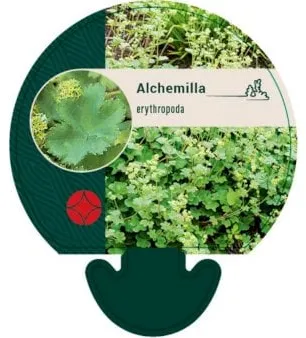
The lion’s foot (Alchemilla erythropoda) is a compact perennial plant that reaches up to 25 cm in height and thrives both in the sun and in partial shade. It is known for its green, slightly hairy leaves, which can collect small drops of dew on the surface of the leaf, giving a characteristic, fresh appearance.
The plant blooms from June to September with small yellow-green flowers on thin stems above the foliage, creating a charming, delicate display.
The lion’s foot is a hardy and easy-to-grow perennial that fits well in many combinations – from borders to rock gardens. It is ideal for beds, edges and physical gardens, offering volume and colour throughout the growing season.
The decorative leaves and flowers can be used in bouquets and arrangements, and the plant also attracts beneficial insects. It is therefore a practical choice for gardeners who want a beautiful and functional front garden.
- Flowering: June to September with small yellow-green flowers.
- Growing conditions: Thrives in sun as well as partial shade and in most well-drained soils.
- Height: Up to 25 cm, compact and low-growing plant.
- Planting density: Up to 9 plants per square metre for dense foliage.
- Use: Suitable as ground cover, for borders and in beds.
Pros and cons
- Very hardy and easy to grow
- Thrives both in the sun and in the shade
- Decorative, slightly hairy leaves with characteristic appearance
- Long flowering period throughout the summer
- Suitable as ground cover and for pots
- May spread if not controlled
- The flowers are small and delicate compared to other perennial flowering plants with large flowers
Pros and cons
Pros
- Very hardy and easy to grow
- Thrives both in the sun and in the shade
- Decorative, slightly hairy leaves with characteristic appearance
- Long flowering period throughout the summer
- Suitable as ground cover and for pots
Cons
- May spread if not controlled
- The flowers are small and delicate compared to other perennial flowering plants with large flowers
Pros
- Very hardy and easy to grow
- Thrives both in the sun and in the shade
- Decorative, slightly hairy leaves with characteristic appearance
- Long flowering period throughout the summer
- Suitable as ground cover and for pots
Cons
- May spread if not controlled
- The flowers are small and delicate compared to other perennial flowering plants with large flowers
Specifications
- Botanical name: Alchemilla erythropoda
- Plant height: Up to 25 cm
- Planting density: 9 plants per m²
- Flowering period: June–September
- Flower colour: Yellow-green
- Foliage colour: Green, slightly hairy leaves
- Position: Sun / partial shade
- Use: Pots, borders, ground cover, beds
- Plant type: Perennial
- Leaf type: Medium to large
- Soil type: Loamy
- Use: Pots, borders, ground cover, beds
- Hardiness: Fully hardy
- Recommended planting distance: Medium
- Pot size: 20–30 cm
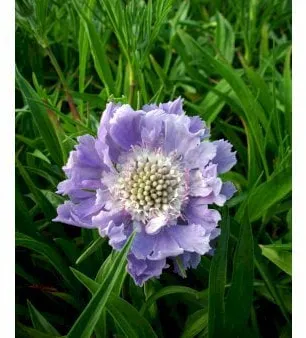
The Scabiosa 'Perfecta' (Scabiosa caucasica) is a perennial plant that produces large violet-blue flowers on long but sturdy stems. The plant originates from the Caucasus and thrives in a sunny and well-drained location.
It blooms best in full sun with rich soil and in well-drained soil. The flowers are round and deeply cut, giving the plant a characteristic charm and texture during the flowering period.
With a height of about 70 cm and a flowering period of 5–6 flowers per stem, it is ideal both as a border plant and as part of a mixed perennial bed. It is also ideal for cutting, as the flowers retain their shape and colour in the vase.
The Scabiosa 'Perfecta' is popular among gardeners and florists alike, making it a great choice for those wishing to promote biodiversity in the garden.
- Flowering period: From June to October with large violet-blue flowers.
- Ideal for cutting: Retains its shape and colour in bouquets.
- Thrives in the sun: Prefers full sun and well-drained soil.
- Attracts pollinators: Loved by bees and butterflies.
- Height: Grows up to about 70 cm.
Pros and cons
- Long flowering period from summer to autumn
- Ideal both for borders and for bouquets
- Attracts pollinators
- Easy to grow in sunny and well-drained locations
- Does not thrive in shade or wet soil
- Requires sunny location to achieve best flowering
Pros and cons
Pros
- Long flowering period from summer to autumn
- Ideal both for borders and for bouquets
- Attracts pollinators
- Easy to grow in sunny and well-drained locations
Cons
- Does not thrive in shade or wet soil
- Requires sunny location to achieve best flowering
Pros
- Long flowering period from summer to autumn
- Ideal both for borders and for bouquets
- Attracts pollinators
- Easy to grow in sunny and well-drained locations
Cons
- Does not thrive in shade or wet soil
- Requires sunny location to achieve best flowering
Specifications
- Botanical name: Scabiosa caucasica 'Perfecta'
- Category: Perennial plant
- Height: approx. 70 cm
- Width: 30–50 cm
- Flowering period: 5–6 flowers per stem
- Flowering period: June–October
- Flower colour: Violet-blue
- Leaf colour: Green
- Growth form: Upright
- Flower type: Single
- Location: Full sun
- Soil type: Well-drained
- Use: Beds, borders, lawns, pots
- Plant type: Perennial
- Propagation: Clump division
- Planting distance: 0.8 litre and 1 litre
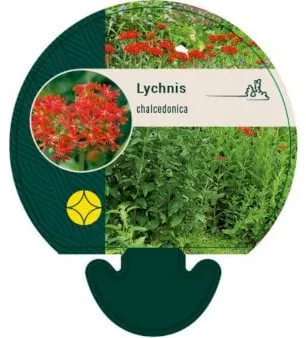
Flaming Love (Lychnis chalcedonica) is a perennial plant characterised by its bright red flowers and its distinctive star-shaped petals in dense terminal clusters. The plant grows up to 100 cm tall and has oval, fresh green, slightly hairy and armoured leaves.
This perennial originates from Siberia and Mongolia and can therefore thrive well in the temperate climate. It thrives best in full sun and in well-drained soil, which is enriched with moderate fertilisation. It is fully hardy and therefore suitable for most northern European gardens.
Flaming Love is often used in perennial beds, in borders and is also suitable as a cut flower due to its long-lasting and decorative flowers. With its upright growth and dense flower clusters, it provides colour and volume to the beds.
- Plant height: Up to 100 cm with upright growth.
- Origin: Siberia–Mongolia, with bright red flowers in dense clusters.
- Location: Thrives best in full sun.
- Flower shape: Round, star-shaped flowers.
- Use: Ideal for beds, borders and as a cut flower.
Pros and cons
- Hardy and ideal for the northern climate
- Long flowering period during the summer months
- Dense flower clusters that create visual interest in the bed
- Can be used as a cut flower
- Requires full sun for best flowering
- Can become tall and may need support in exposed locations
Pros and cons
Pros
- Hardy and ideal for the northern climate
- Long flowering period during the summer months
- Dense flower clusters that create visual interest in the bed
- Can be used as a cut flower
Cons
- Requires full sun for best flowering
- Can become tall and may need support in exposed locations
Pros
- Hardy and ideal for the northern climate
- Long flowering period during the summer months
- Dense flower clusters that create visual interest in the bed
- Can be used as a cut flower
Cons
- Requires full sun for best flowering
- Can become tall and may need support in exposed locations
Specifications
- Botanical name: Lychnis chalcedonica
- Height: 50–100 cm
- Width: 20–40 cm
- Flower colour: Bright red, red
- Flowering period: June–July (summer, early summer)
- Flower shape: Round, star-shaped
- Flower type: Clusters
- Growth form: Upright
- Growth habit: Perennial
- Location: Full sun
- Hardiness: Fully hardy
- Plant spacing: 38–55 cm
- Use: Beds and borders, common garden flower
- Recommended planting distance: Medium
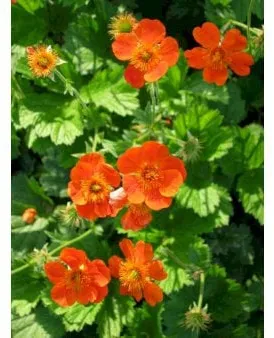
The Geum 'Nordek' (Geum heldreichii) is a compact, decorative perennial that forms small clumps and prefers to grow in borders. It reaches a height of 30–40 cm and has bright yellow-orange flowers that contrast beautifully with the green foliage.
The plant originates from the Ionian–Ioulian region, where it naturally grows in bright mountain meadows, cultivated by experienced, mountain-loving gardeners. Under suitable conditions, it can form a small perennial clump at the edge of the flower bed.
The plant thrives best in sun or light shade and prefers soil that is not too dry, but well-drained. It is hardy as a perennial and can bloom with flower stems 7–9 times per growing season.
The Geum attracts a range of pollinators, such as bumblebees, solitary bees, butterflies and beetles, which appear early in the season. It is therefore a good choice for gardeners who want to promote biodiversity.
With its natural origin and ability to form compact clumps, it fits well in perennial beds, rock gardens and as part of mixed plantings, which combine aesthetic beauty and functional diversity.
- Flower colour: Bright orange-yellow flowers from the Ionian–Ioulian region.
- Height: Approximately 30–40 cm.
- Growth form: Compact and decorative, bright yellow-orange flowers.
- Location: Sun to partial shade, prefers light, moist soil.
- Biodiversity: Attracts bees, butterflies and beetles.
Pros and cons
- Long flowering period with bright flowers
- Bright yellow-orange flowers and decorative green foliage
- Hardy as a perennial and suitable for rock gardens
- Attracts pollinators such as bees and butterflies
- Hardy and easy to grow in most garden soils
- May require light soil in very dry conditions
- Needs regular watering during hot summer periods
Pros and cons
Pros
- Long flowering period with bright flowers
- Bright yellow-orange flowers and decorative green foliage
- Hardy as a perennial and suitable for rock gardens
- Attracts pollinators such as bees and butterflies
- Hardy and easy to grow in most garden soils
Cons
- May require light soil in very dry conditions
- Needs regular watering during hot summer periods
Pros
- Long flowering period with bright flowers
- Bright yellow-orange flowers and decorative green foliage
- Hardy as a perennial and suitable for rock gardens
- Attracts pollinators such as bees and butterflies
- Hardy and easy to grow in most garden soils
Cons
- May require light soil in very dry conditions
- Needs regular watering during hot summer periods
Specifications
- Botanical name: Geum heldreichii 'Nordek'
- Danish name: Geum
- Category: Perennials
- Height: 30–40 cm
- Width: 20–30 cm
- Flowering period: 7–9 times per year
- Flowering period: June–July (typical perennial flowering period in August/September)
- Flower colour: Bright orange-yellow
- Foliage colour: Green, bright leaves
- Location: Sun / partial shade
- Soil type: Not too dry, prefers light, moist soil
- Growth form: Decorative, compact
- Hardiness: Fully hardy
- Use: Perennial beds and borders, decorative, biodiversity
- Copy: Hardy as a garden plant
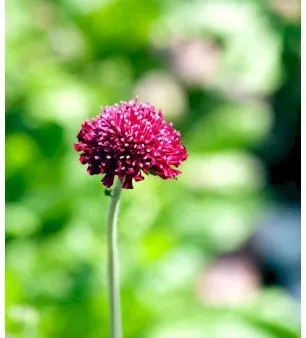
The Blue Cap (Knautia macedonica 'Mars Midget') is a perennial plant that produces beautiful flowers and bears dark red flowers with a diameter of 1–5 cm. The flower originates from the Balkans from June to September, providing a continuous colour in the garden.
The plant grows to a height of 20–40 cm and has dark green, deeply divided leaves that form a dense and decorative base. It is ideal as a border plant or for the front part of the bed, where it can bloom with a spacing of about 50 cm.
The Blue Cap thrives well in full sun and in well-drained soil. It requires moderate watering and is quite hardy, making it suitable for gardens both large and small. The species is known for its attractiveness to pollinators and its ability to thrive in sunny locations.
- Main flowering period: From June to September with dark red flowers.
- Growth height: 20–40 cm high and wide, compact growth habit.
- Hardy and easy to care for: Thrives in sunny locations and requires moderate watering.
- Ideal for garden beds: Thrives well in full sun.
- Popular choice: Ideal for borders, flower beds and gardens.
Pros and cons
- Main flowering period from June to September
- Hardy and easy to care for perennial plant
- Ideal for garden beds and sunny locations
- Beautiful and compact growth, ideal for borders and gardens
- Requires sunny location for best flowering
- May need well-drained soil to prevent root rot
Pros and cons
Pros
- Main flowering period from June to September
- Hardy and easy to care for perennial plant
- Ideal for garden beds and sunny locations
- Beautiful and compact growth, ideal for borders and gardens
Cons
- Requires sunny location for best flowering
- May need well-drained soil to prevent root rot
Pros
- Main flowering period from June to September
- Hardy and easy to care for perennial plant
- Ideal for garden beds and sunny locations
- Beautiful and compact growth, ideal for borders and gardens
Cons
- Requires sunny location for best flowering
- May need well-drained soil to prevent root rot
Specifications
- Botanical name: Knautia macedonica 'Mars Midget'
- Plant height: 20–40 cm (can grow up to 50 cm)
- Plant width: 20–40 cm
- Flower colour: Dark red to crimson
- Flower diameter: 1–5 cm
- Flowering period: June–September
- Leaf colour: Dark green, deeply divided
- Growth habit: Upright
- Type of plant: Perennial
- Preferred location: Full sun
- Watering requirement: Moderate
- Hardiness: Hardy perennial
- Use: Beds, borders, gardens
- Plant spacing: About 50 cm
Product descriptions
English Grass, botanically known as Armeria pseudarmeria 'Ballarina White', is a compact and tuft-forming perennial plant that produces dense tufts of narrow, velvety green leaves. It produces spherical flower heads on long stems, which emerge from the dense foliage.
The plant prefers sunny and warm locations, typical of the Mediterranean region, and thrives well in full sun. It is fully hardy and tolerates light frost, making it ideal for coastal areas and rocky gardens.
With a height of 20–40 cm and a width of 10–30 cm, English Grass fits well in the foreground of borders, in rock gardens or as a potted plant. It can also be used in lawns, where the compact growth form offers a uniform and well-defined appearance.
- Location: Full sun from May–June.
- Growth form: Forms tufts and has a compact growth form.
- Soil: Thrives well in full sun.
- Use: Ideal for borders, rock gardens and parks.
- Hardiness: Fully hardy and easy to grow.
Pros and cons
- Suitable for borders and hardy perennial beds
- Compact growth form ideal for small gardens and borders
- Good period of flowering and colour
- Hardy perennial with white flowers
- Requires regular watering during the growing season
- May need division every few years to maintain compact growth
Pros and cons
Pros
- Suitable for borders and hardy perennial beds
- Compact growth form ideal for small gardens and borders
- Good period of flowering and colour
- Hardy perennial with white flowers
Cons
- Requires regular watering during the growing season
- May need division every few years to maintain compact growth
Pros
- Suitable for borders and hardy perennial beds
- Compact growth form ideal for small gardens and borders
- Good period of flowering and colour
- Hardy perennial with white flowers
Cons
- Requires regular watering during the growing season
- May need division every few years to maintain compact growth
Specifications
- Botanical name: Armeria pseudarmeria 'Ballarina White'
- Category: Perennial plant
- Plant category: Perennial plant
- Subcategory: English Grass
- Flower colour: White
- Flowering period: May, June (May–June)
- Flower shape: Spherical, globular
- Flower texture: Velvety
- Height: 20–40 cm
- Width: 10–30 cm
- Flowering height: 35–50 cm
- Growth form: Forms tufts
- Location: Sunny
- Soil: Light
- Use: Borders
- Leaf colour: Green
- Hardiness: Hardy
- Use: Borders, rock gardens and parks
- Planting distance: 1–5
- Plant height: 1–5, 2–4
The Dark Mullein (Verbascum nigrum 'Album') is a perennial plant that is characterised by its upright growth and light flowers, which originate from July to September. The plant can reach a height of 80 to 200 cm. It thrives best in sunny locations and forms a dense, compact clump in the garden.
The flowers are white and showy, and the plant thrives best in full sun, where it can be seen at its best. It is particularly well suited for natural and medium-sized planting. The Dark Mullein is also very hardy and ideal for the Danish climate.
This perennial is suitable for beds and parks, where it can be planted in groups or in areas with a planting distance of 45–60 cm. It combines well with other perennial plants and provides both height and physical presence in the planting.
- Flowering period: July to September with light flowers.
- Growth form: Upright and medium-sized perennial plant.
- Location: Thrives best in full sun and well-drained soil.
- Height: Typically 80–200 cm. thrives best in sunny locations.
- Use: Suitable for beds and parks as a feature plant.
Pros and cons
- Hardy and very easy-to-grow perennial plant
- Attractive flowering period that attracts bees and other pollinators
- Suitable for naturalistic plantings
- Provides height and structure in borders
- Requires sunny location for best flowering
- May self-seed in suitable conditions or in areas with loose soil
Pros and cons
Pros
- Hardy and very easy-to-grow perennial plant
- Attractive flowering period that attracts bees and other pollinators
- Suitable for naturalistic plantings
- Provides height and structure in borders
Cons
- Requires sunny location for best flowering
- May self-seed in suitable conditions or in areas with loose soil
Pros
- Hardy and very easy-to-grow perennial plant
- Attractive flowering period that attracts bees and other pollinators
- Suitable for naturalistic plantings
- Provides height and structure in borders
Cons
- Requires sunny location for best flowering
- May self-seed in suitable conditions or in areas with loose soil
Specifications
- Botanical name: Verbascum nigrum 'Album'
- Plant category: Perennial
- Plant type: Perennial plant
- Genus: Verbascum
- Flower colour: Light
- Flowering period: July–September
- Flower shape: White
- Flower size: Showy
- Height: 80–200 cm.
- Width: 30–50 cm.
- Location: Full sun
- Growth form: Upright
- Planting distance: 45–60 cm.
- Pot size: Medium
- Use: Beds and parks
The Japanese anemone 'Andrea Atkinson' is a perennial plant that produces compact white flowers on tall stems. The flowers emerge from buds, dark green foliage and have a bright and airy character in the garden.
The plant blooms from August to October and offers colour and structure to the borders of the garden. It thrives best in sun or partial shade, rich in humus and in well-drained, moist soil.
The perennial reaches up to 90 cm in height and spreads easily with underground rhizomes, making it a perfect choice for the natural planting of smaller garden areas. It can be used as a solitary plant or in groups and is ideal for flower beds.
With proper care, it can form a dense and beautiful mass of flowers in the garden of perennials.
- Flowering period: August to October with large white flowers.
- Growing conditions: Thrives in sun or partial shade and in well-drained, moist soil.
- Height: Up to 90 cm with a striking flower form.
- Planting density: About 6 plants per square metre.
- Ideal for garden beds: Provides impressive autumn flowers for flower beds.
Pros and cons
- Long flowering period in late summer
- Large, distinctive white flowers
- Ideal both for borders and for garden beds
- Can attract beneficial insects with its pollen
- Requires well-drained soil to prevent root rot
- Can spread if the growing conditions are very favourable
Pros and cons
Pros
- Long flowering period in late summer
- Large, distinctive white flowers
- Ideal both for borders and for garden beds
- Can attract beneficial insects with its pollen
Cons
- Requires well-drained soil to prevent root rot
- Can spread if the growing conditions are very favourable
Pros
- Long flowering period in late summer
- Large, distinctive white flowers
- Ideal both for borders and for garden beds
- Can attract beneficial insects with its pollen
Cons
- Requires well-drained soil to prevent root rot
- Can spread if the growing conditions are very favourable
Specifications
- Botanical name: Anemone x hybrida 'Andrea Atkinson'
- Plant height: 50–100 cm (typically around 90 cm)
- Width: 30–50 cm
- Flower colour: White
- Flowering period: August–October
- Location: Sun / partial shade
- Flower form: Single
- Flowering: Medium
- Flower shape: Almost round to cup-shaped
- Flower texture: Smooth
- Planting density: 6 plants per m²
- Planting height: around 45 cm
- Plant type: Perennial
- Garden use: No
- Pot size: Medium
- Category: Perennial / Anemone
The Creeping Evening Primrose (Oenothera macrocarpa) is a low, cushion-forming perennial that reaches a height of 15–30 cm and spreads widely in the bed. It has large, bright yellow flowers with cup-shaped petals and a pleasant fragrance, making it ideal as a ground cover or border plant.
The plant thrives best in full sun with well-drained soil. It grows in dry conditions and tolerates light frost once established. For optimal flowering, the flowering period is 4–6 flowers per square metre.
The plant originates from the United States, from the region of Missouri to the Midwest, where it grows in large, sunny areas that are often dry during the summer. The plants produce night-blooming flowers and other pollination-friendly features, contributing to a vibrant garden bed.
The Creeping Evening Primrose is ideal for rock gardens, beds and sunny edges, where the plant and its flowers form a beautiful carpet of colour along the garden's surface.
- Low perennial plant: Forms dense cushions and is ideal as a ground cover.
- Large flowering period: Large, yellow flowers from June to September.
- Thrives in sun and dry conditions: Grows well in full sun and well-drained soil.
- Attractive to pollinators: Produces night-blooming flowers and other pollination-friendly features.
- Ideal for rock gardens: Thrives well in sunny and dry garden beds.
Pros and cons
- Large flowering period with large, yellow flowers
- Beautiful combination and aesthetic in the garden
- Attractive to pollinators
- Ideal for rock gardens and sunny beds
- Requires well-drained soil to avoid rot
- The plant is short-lived, but self-seeds easily
Pros and cons
Pros
- Large flowering period with large, yellow flowers
- Beautiful combination and aesthetic in the garden
- Attractive to pollinators
- Ideal for rock gardens and sunny beds
Cons
- Requires well-drained soil to avoid rot
- The plant is short-lived, but self-seeds easily
Pros
- Large flowering period with large, yellow flowers
- Beautiful combination and aesthetic in the garden
- Attractive to pollinators
- Ideal for rock gardens and sunny beds
Cons
- Requires well-drained soil to avoid rot
- The plant is short-lived, but self-seeds easily
Specifications
- Botanical name: Oenothera macrocarpa
- Danish name: Creeping Evening Primrose
- Plant height: 15–30 cm
- Plant width: 10–20 cm
- Flowering period: 4–6 flowers per m²
- Flowering period: June–September
- Flower colour: Yellow
- Leaf colour: Green to dark green
- Growth form: Cushion-forming perennial, spreading
- Location: Full sun
- Type of soil: Well-drained
- Use: Perennial bed
- Pot size: Medium
- Category: Perennial – Evening Primrose
The Iris pseudacorus is a perennial plant that grows to a height of 70 to 100 cm. It develops large clumps with dark green leaves, which appear at the top during the flowering period from June to July.
The plant thrives best in full sun and grows well in moist soil, making it ideal for planting near ponds, streams or other wet areas. It can be planted directly as a water plant or in damp soils to create a natural look.
The flowers are bright and yellow, and the flowering period is from late spring to summer. The Iris pseudacorus can be used as a decorative plant, but its main value lies in its ability to provide shelter and colour to the wet areas of the garden.
- Height: 70–100 cm
- Growth habit: Large clumps with dark green leaves
- Flowering period: June–July
- Colour: Bright yellow
- Location: Sun to moist soil, e.g. near ponds or lakes
- Use: Ornamental or in beds, also as a water plant
Pros and cons
- Thrives in sun and moist soil
- Impressive clump-forming growth with dark green leaves
- Ideal for ponds and lakes
- Can be used as a water plant
- Requires moist soil and does not thrive in dry areas
- Can spread if not controlled
Pros and cons
Pros
- Thrives in sun and moist soil
- Impressive clump-forming growth with dark green leaves
- Ideal for ponds and lakes
- Can be used as a water plant
Cons
- Requires moist soil and does not thrive in dry areas
- Can spread if not controlled
Pros
- Thrives in sun and moist soil
- Impressive clump-forming growth with dark green leaves
- Ideal for ponds and lakes
- Can be used as a water plant
Cons
- Requires moist soil and does not thrive in dry areas
- Can spread if not controlled
Specifications
- Botanical name: Iris pseudacorus
- Plant height: 70–100 cm
- Growth habit: Clump-forming with dark green leaves
- Flowering period: June–July
- Colour: Bright yellow
- Location: Sun to moist soil, near ponds or lakes
- Flower shape: Upright
- Flowering time: Medium
- Flower height: Upright
- Flower shape: Upright
- Flower colour: Yellow
- Common name: Iris
- Planting distance: 35–55 cm
- Plant width: 20–40 cm
- Plant type: Perennial
- Soil: Medium
- Recommended planting: Medium
- Category: Perennial, Iris
The spurge plant 'Purpurea' (Euphorbia amygdaloides 'Purpurea') is a compact, perennial plant that is characterised by its red foliage and its ability to retain colour and shape throughout the season. The plant thrives well in both shady and sunny locations, making it suitable for a wide range of garden designs. The plant is particularly suitable as a ground cover or border, where it highlights the colour of the rest of the garden.
It grows to a height of 30–50 cm and a width of 20–30 cm, making it ideal as a foreground plant or for use in mixed borders. The planting density is recommended at 5–6 plants per square metre for optimal coverage.
The plant blooms from April to June, when it produces characteristic flowers in red and green, gathered in large clusters. It is suitable for pots and can be used in arrangements.
The plant's sap is toxic and should be handled with care. The species is very hardy and adapts easily to most soil types with good drainage.
- Distinctive foliage: Red leaves that provide colour and shape in the garden throughout the season.
- Flowering: Red and green flowers from April to June.
- Location: Thrives in shady and sunny areas.
- Perennial: Retains its foliage through the seasons.
- Suitable for pots: Can be used in pots and arrangements.
Pros and cons
- Perennial and distinctive all year round
- Hardy in shady and sunny areas
- Compact growth form suitable for ground cover, ideal for border planting
- Thrives well in the season
- The plant's sap is toxic and requires careful handling
- May lose some of its colour in very sunny locations
Pros and cons
Pros
- Perennial and distinctive all year round
- Hardy in shady and sunny areas
- Compact growth form suitable for ground cover, ideal for border planting
- Thrives well in the season
Cons
- The plant's sap is toxic and requires careful handling
- May lose some of its colour in very sunny locations
Pros
- Perennial and distinctive all year round
- Hardy in shady and sunny areas
- Compact growth form suitable for ground cover, ideal for border planting
- Thrives well in the season
Cons
- The plant's sap is toxic and requires careful handling
- May lose some of its colour in very sunny locations
Specifications
- Botanical name: Euphorbia amygdaloides 'Purpurea'
- Danish name: Red spurge plant
- Category: Perennial plant
- Height: 30–50 cm
- Width: 20–30 cm
- Planting density: 5–6 plants per m²
- Flowering period: April–June
- Flower colour: Red and green
- Leaf colour: Red to reddish-green
- Light conditions: Partial shade to full sun
- Growth form: Upright
- Hardiness: Hardy
- Soil type: Well-drained
- Location: Beds, parks and borders
- Recommended planting distance: Medium
Penstemon 'Garnet' is a perennial plant characterised by its dark red tubular flowers and glossy foliage, a typical feature of the genus Penstemon. The plant has long, glossy leaves and attracts pollinators such as bees and butterflies.
It thrives best in full sun and prefers well-drained soil. With a height of 70–80 cm and a width of 20–30 cm, it fits well in perennial flower beds, where it can provide height and visual interest.
The Beardtongue can be used both in beds and parks as well as in borders. It is hardy and ideal for cutting, making it suitable as a common perennial in bouquets.
The plant has a medium flowering period and requires moderate watering to maintain healthy growth throughout the season.
- Flower colour: Dark red tubular flowers that provide a striking visual effect in the garden.
- Flower shape: Tubular and medium-sized flowers, ideal for beds and borders.
- Location: Thrives best in full sun and well-drained soil.
- Hardiness: Hardy and ideal for the Danish climate.
- Use: Can be used as a common perennial and in decorative plantings.
Pros and cons
- Long flowering period that attracts pollinators
- Ideal for beds, parks and borders
- Hardy and withstands Danish winters
- Can be used as a common perennial
- Requires sunny location for best flowering
- Needs regular watering to maintain vitality
Pros and cons
Pros
- Long flowering period that attracts pollinators
- Ideal for beds, parks and borders
- Hardy and withstands Danish winters
- Can be used as a common perennial
Cons
- Requires sunny location for best flowering
- Needs regular watering to maintain vitality
Pros
- Long flowering period that attracts pollinators
- Ideal for beds, parks and borders
- Hardy and withstands Danish winters
- Can be used as a common perennial
Cons
- Requires sunny location for best flowering
- Needs regular watering to maintain vitality
Specifications
- Botanical name: Penstemon 'Garnet'
- Category: Perennial plant
- Plant category: Perennial plant
- Type: Plant
- Flowering period: Summer (July–August)
- Flower colour: Dark red
- Flower shape: Tubular, bell-shaped
- Flower size: Medium
- Flower shape: Tubular
- Height: 70–80 cm (can vary 50–100 cm)
- Width: 20–30 cm
- Planting distance: 45–50 cm
- Location: Full sun
- Hardiness: Hardy
- Flowering: Medium flowering period
- Watering: Moderate watering
- Soil type: Loamy
- Use: Beds, parks and borders
- Cutting: Ideal as a common perennial
The Perennial Sage (Salvia nemorosa 'Ostfriesland') is a perennial plant that produces upright spikes of blue-purple flowers. It grows up to 40 cm in height and is ideal for borders, where it can provide colour and structure throughout the summer.
The plant thrives best in well-drained and sunny locations with good, moderately fertile soil. It grows in dense clumps and also has a pleasant fragrance. If the withered flowers are removed, the plant can bloom again later in the summer.
The Perennial Sage is ideal for pots and can be easily combined with other perennials. It has aromatic leaves and attracts many pollinators such as bees and butterflies, making it an excellent choice for wildlife-friendly gardens.
With a flowering period of 5–6 weeks from mid-summer, it forms a dense and harmonious clump. It is fully hardy and ideal for individual garden beds as well as for parks.
- Blue-purple flowers: Attracts bees and butterflies to the garden from June to August.
- Ideal for borders: Provides colour and structure with its dense and upright growth.
- Aromatic leaves: Offer a pleasant aroma and add sensory interest to the garden.
- Easy to maintain: Requires minimal care once established.
- Hardy and sun-loving: Thrives in full sun and attracts beneficial insects.
Pros and cons
- Attracts pollinators such as bees and butterflies
- Provides colour and structure with dense and upright growth
- Ideal for pots and borders
- Aromatic and hardy plant
- Hardy and easy to grow in sunny garden areas
- Requires sunny location for best flowering
- Withered flowers should be removed to encourage new blooms
- May need division every few years to maintain vigour
Pros and cons
Pros
- Attracts pollinators such as bees and butterflies
- Provides colour and structure with dense and upright growth
- Ideal for pots and borders
- Aromatic and hardy plant
- Hardy and easy to grow in sunny garden areas
Cons
- Requires sunny location for best flowering
- Withered flowers should be removed to encourage new blooms
- May need division every few years to maintain vigour
Pros
- Attracts pollinators such as bees and butterflies
- Provides colour and structure with dense and upright growth
- Ideal for pots and borders
- Aromatic and hardy plant
- Hardy and easy to grow in sunny garden areas
Cons
- Requires sunny location for best flowering
- Withered flowers should be removed to encourage new blooms
- May need division every few years to maintain vigour
Specifications
- Botanical name: Salvia nemorosa 'Ostfriesland'
- Plant height: approx. 40 cm
- Flower colour: Blue-purple
- Pollinator period: June – August
- Location: Full sun
- Flowering period: 5–6 weeks from mid-summer
- Foliage colour: Grey-green
- Soil type: Well-drained
- Plant type: Perennial
- Use: Beds and borders, pots
- Origin: Germany
- Propagation method: Division or cuttings
- Plant spacing: 20–40 cm
- Category: Perennial, Sage
Echinacea (Echinacea 'Tomato Soup' (r)) is a perennial plant that produces a bright orange-red tone and a strong aroma in the garden. The plant grows typically 60–80 cm in height and 20–40 cm in width, making it ideal as a medium or low plant in gardens.
It blooms beautifully in full sun and can be planted with a spacing of about 40 cm to create beautiful colour areas. The flowers are 10–12 cm in diameter and bloom from July to September. The flowers are upright and long-lasting, and the plant is hardy and durable.
Echinacea is widely used in garden design and is also known for its medicinal properties. It is ideal both as an ornamental plant in gardens and as a common plant. The plant is known for its ability to attract bees and butterflies and to promote pollination.
The plant prefers well-drained soil and can withstand dry periods quite well. It is generally resistant to diseases and pests and requires minimal maintenance.
- Colour and flowering: Large orange-red flowers 10–12 cm, blooming from July to September.
- Growth form: Upright and medium growth with height 60–80 cm and width 20–40 cm.
- Location: Blooms best in full sun and well-drained soil.
- Hardiness: Fully hardy in the Danish climate.
- Use: Ideal as an ornamental plant, for pots and for attracting pollinators.
Pros and cons
- Long flowering period from July to September
- Hardy and ideal for Danish conditions
- Attracts bees and butterflies
- Ideal as a common garden plant
- Has known medicinal properties
- Does not thrive in shade and wet soil
- Requires light in sunny areas
Pros and cons
Pros
- Long flowering period from July to September
- Hardy and ideal for Danish conditions
- Attracts bees and butterflies
- Ideal as a common garden plant
- Has known medicinal properties
Cons
- Does not thrive in shade and wet soil
- Requires light in sunny areas
Pros
- Long flowering period from July to September
- Hardy and ideal for Danish conditions
- Attracts bees and butterflies
- Ideal as a common garden plant
- Has known medicinal properties
Cons
- Does not thrive in shade and wet soil
- Requires light in sunny areas
Specifications
- Botanical name: Echinacea 'Tomato Soup' (r)
- Common name: Echinacea
- Category: Perennial plant
- Height: 60–80 cm
- Width: 20–40 cm
- Flower colour: Orange-red
- Flowering period: July–September
- Flower diameter: 10–12 cm
- Flower shape: Upright
- Flower texture: Long-lasting
- Growth form: Upright
- Hardiness: Hardy
- Location: Full sun
- Planting distance: approx. 40 cm
- Hardiness: Fully hardy
- Propagation method: Division
- Ideal for pots: Yes
- Suitable for cutting: Yes
- Preferred growing conditions: Full sun and well-drained soil
Mountain mint (Calamintha nepeta ssp. nepeta) is a low, dense perennial plant that forms dense tufts of grey-green leaves with a characteristic minty aroma. The plant reaches a height of 30–50 cm and a width of 20–40 cm, making it ideal as a border plant or as a foreground plant in flower beds and among shrubs.
It thrives best in sunny or semi-shaded positions with well-drained soil and originates from southern Europe, from Italy to the Balkans, with pinkish-blue flowers. The flowers attract many bees and butterflies and contribute to a vibrant environment in the garden and the surrounding ecosystem.
Mountain mint is hardy and can withstand light frost. It can be used both as an ornamental plant and as a culinary herb, as its aromatic leaves can be used in cooking. The flowering period usually lasts from 5–6 months, making it a long-lasting addition to any garden.
The plant is known for its ability to form a dense, fragrant carpet that suppresses weeds. It is associated with the name Thyme of the Castle and is one of the most popular perennial plants for bee-friendly gardens.
- Aromatic leaves: Emits a characteristic minty aroma.
- Long flowering period: Blooms from July to October with pinkish-blue flowers.
- Attracts pollinators: Bees and butterflies are attracted to the flowers.
- Ideal as a border plant: Forms dense tufts that suppress weeds.
- Hardy and easy to grow: Thrives in full sun and can withstand light frost.
Pros and cons
- Long flowering period from July to October
- Aromatic leaves with a minty aroma
- Attracts pollinators
- Ideal as a border plant in flower beds
- Hardy and easy to grow in the garden
- Thrives best in full sun and may become leggy in shade
- Requires well-drained soil to avoid root rot problems
Pros and cons
Pros
- Long flowering period from July to October
- Aromatic leaves with a minty aroma
- Attracts pollinators
- Ideal as a border plant in flower beds
- Hardy and easy to grow in the garden
Cons
- Thrives best in full sun and may become leggy in shade
- Requires well-drained soil to avoid root rot problems
Pros
- Long flowering period from July to October
- Aromatic leaves with a minty aroma
- Attracts pollinators
- Ideal as a border plant in flower beds
- Hardy and easy to grow in the garden
Cons
- Thrives best in full sun and may become leggy in shade
- Requires well-drained soil to avoid root rot problems
Specifications
- Botanical name: Calamintha nepeta ssp. nepeta
- Common name: Mountain mint
- Plant height: 30–50 cm
- Plant width: 20–40 cm
- Flowering period: 5–6 months per year
- Flowering period: July–October
- Flower colour: Pinkish-blue
- Leaf colour: Grey-green
- Preferred location: Full sun or partial shade
- Growth form: Upright, medium growth
- Origin: South Europe
- Hardiness: Fully hardy
- Use: Border plant, flower bed, ornamental herb
- Other names: Thyme of the Castle
Edelweiss (Leontopodium soul. 'Alpina White') is a compact and slow-growing perennial plant, characterised by its characteristic white woolly leaves and star-shaped flowers. The plant has a natural charm in alpine environments and thrives best in full sun and well-drained soil.
It grows to about 25 cm in height and spreads to about 20–30 cm. The leaves are arranged in rosettes with a length of 2 to 5 cm and are covered with white hairs, giving them a silvery appearance. It prefers a sunny location, which makes it ideal for rock gardens or sunny borders.
Edelweiss is fully hardy and ideal for growing in alpine gardens, parks and as a border plant. It can also be used as a cut flower, as the plant’s leaves and flowers retain their shape and colour for a long time after cutting.
The plant requires light pruning, but thrives best when it has open soil and is not crowded by taller plants. It is also suitable for container planting, which other plants may find difficult to adapt to.
- Charming perennial plant: Grows to about 25 cm in height and forms dense clusters of star-shaped flowers.
- White leaves: Leaves measuring 2–5 cm form a classic alpine rosette.
- Star-shaped flowers: Typical flower shape with the characteristic star pattern.
- Hardy plant: Thrives in cold climates and requires little maintenance.
- Ideal for alpine gardens: Thrives best in full sun and well-drained soil.
Pros and cons
- Hardy and ideal for cold climates
- Beautiful structure and slow growth
- White woolly leaves with distinctive appearance
- Thrives best in full sun and well-drained soil
- May struggle to adapt to humid or shady conditions
- The slow growth means it takes time to fill larger planting areas
Pros and cons
Pros
- Hardy and ideal for cold climates
- Beautiful structure and slow growth
- White woolly leaves with distinctive appearance
- Thrives best in full sun and well-drained soil
Cons
- May struggle to adapt to humid or shady conditions
- The slow growth means it takes time to fill larger planting areas
Pros
- Hardy and ideal for cold climates
- Beautiful structure and slow growth
- White woolly leaves with distinctive appearance
- Thrives best in full sun and well-drained soil
Cons
- May struggle to adapt to humid or shady conditions
- The slow growth means it takes time to fill larger planting areas
Specifications
- Botanical name: Leontopodium soul. 'Alpina White'
- Category: Perennial plant
- Plant category: Perennial plant
- Use: Alpine gardens, borders and parks
- Growth form: Star-shaped flowers
- Growth: Slow growth
- Height: 25 cm
- Width: 20–30 cm
- Leaf colour: White
- Flower colour: White and star-shaped
- Flower shape: Star
- Flower size: Medium
- Leaf length: 2–5 cm
- Leaf width: 1–5
- Plant spacing: 35–50 cm
- Location: Full sun
- Hardiness: Fully hardy
- Soil type: Medium
- Container: Suitable
The Gaura, botanically known as Gaura lindheimeri 'Siskiyou Pink', is a perennial plant characterised by its delicate, pink-white flowers and elegant, upright growth. The plant grows to a height of 50–100 cm and a width of 30–50 cm.
The flowers are slender and elongated, resembling a butterfly in appearance and lightness. It attracts pollinators such as bees, originating from the southern United States, and the flowers bloom on long stems that sway gently in the wind.
The Gaura thrives best in sunny or partially shaded locations and prefers well-drained soil. It is ideal for planting in beds and borders, but can also be grown in pots, where it provides a beautiful and airy appearance.
The plant is moderately hardy and has a medium growth rate. It can be used as a companion plant in beds and borders, offering a delicate and graceful appearance.
The plant is moderately hardy and has a medium growth rate. It can be used as a companion plant in beds and borders, offering a delicate and graceful appearance.
- Beautiful pink-white flowers: Attracts pollinators such as bees with pink-white flowers.
- Ideal for sunny and partially shaded locations: Thrives best in well-drained soil with good drainage.
- Elegant upright growth: Provides a light and airy appearance in borders and beds.
- Can be grown as a potted plant: The long stems can be grown in pots.
- Moderate growth rate and hardiness: Requires moderate care and watering.
Pros and cons
- Beautiful pink-white flowers that attract pollinators
- Elegant and airy flower shape
- Ideal for borders and large pots
- Can be grown as a potted plant
- Moderate hardiness – may require protection in colder climates
- Prefers well-drained soil and may not thrive in heavy soil
Pros and cons
Pros
- Beautiful pink-white flowers that attract pollinators
- Elegant and airy flower shape
- Ideal for borders and large pots
- Can be grown as a potted plant
Cons
- Moderate hardiness – may require protection in colder climates
- Prefers well-drained soil and may not thrive in heavy soil
Pros
- Beautiful pink-white flowers that attract pollinators
- Elegant and airy flower shape
- Ideal for borders and large pots
- Can be grown as a potted plant
Cons
- Moderate hardiness – may require protection in colder climates
- Prefers well-drained soil and may not thrive in heavy soil
Specifications
- Botanical name: Gaura lindheimeri 'Siskiyou Pink'
- Category: Perennial plants
- Height: 50–100 cm
- Width: 30–50 cm
- Flower colour: Pink-white
- Pollinator attraction: Bees–Butterflies
- Flower shape: Slender
- Flower appearance: Elongated
- Growth form: Upright
- Location: Sun / partial shade
- Use: Beds, pots and borders
- Flowering height: 100 cm
- Flowering period: Medium
- Hardiness: Medium
- Growth: Moderate growth
- Common name: Nai
Leadwort (Ceratostigma plumbaginoides) is a perennial, beautiful ground cover plant that forms dense mats in beds, borders and parks. It typically grows up to 25 cm in height and 20–40 cm in width, making it suitable as a foreground plant or for filling gaps between other plants.
The plant thrives best in full sun and in well-drained soil with moderate fertility in neutral conditions. It is fully hardy in the Danish climate and tolerates moderate frost after establishment. Leadwort spreads with underground rhizomes and forms a dense carpet of flowers that bloom in late summer.
The leaves are blue and have a diameter of 1–5 cm. They turn red from August to September and provide a beautiful colour contrast at the end of summer. The flowers are bright and vivid, and the plant attracts pollinators from late summer, making it a valuable addition to the garden.
During flowering, it reaches a height of about 50–55 cm, including the flower stems. Leadwort is ideal for beds, parks as well as borders, where it can be used as a beautiful and uniform ground cover.
- Beautiful ground cover plant: Forms a dense carpet of blue flowers and is ideal for decorative and beautiful planting.
- Blue flowers: Blue flowers bloom from August–September and provide colour at the end of summer.
- Hardy plant: Thrives in the Danish climate and tolerates moderate frost.
- Attracts pollinators: The flowers attract pollinators from late summer.
- Ideal for sunny locations: Thrives best in full sun and well-drained soil.
Pros and cons
- Hardy and low-maintenance ground cover plant for sunny locations
- Beautiful blue flowering at the end of summer
- Beautiful colouring and good ground coverage
- Can be used in beds, borders and parks
- Requires sunny location for best flowering
- Can spread if not controlled with root barriers
Pros and cons
Pros
- Hardy and low-maintenance ground cover plant for sunny locations
- Beautiful blue flowering at the end of summer
- Beautiful colouring and good ground coverage
- Can be used in beds, borders and parks
Cons
- Requires sunny location for best flowering
- Can spread if not controlled with root barriers
Pros
- Hardy and low-maintenance ground cover plant for sunny locations
- Beautiful blue flowering at the end of summer
- Beautiful colouring and good ground coverage
- Can be used in beds, borders and parks
Cons
- Requires sunny location for best flowering
- Can spread if not controlled with root barriers
Specifications
- Botanical name: Ceratostigma plumbaginoides
- Danish name: Leadwort
- Plant height: approx. 25 cm
- Plant width: 20–40 cm
- Flower colour: Blue
- Flowering period: August–September
- Flower shape: Flat, with tubular flowers from axillary shoots
- Leaf shape: Ovoid
- Leaf colour: Green
- Autumn colour: Beautiful red
- Root type: Rhizome
- Location: Full sun
- Soil: Well-drained soil, moderately fertile
- Soil pH: Neutral
- Flowering height: approx. 50–55 cm
- Hardiness: Fully hardy
- Use: Beds, parks, borders
The lion’s foot (Alchemilla erythropoda) is a compact perennial plant that reaches up to 25 cm in height and thrives both in the sun and in partial shade. It is known for its green, slightly hairy leaves, which can collect small drops of dew on the surface of the leaf, giving a characteristic, fresh appearance.
The plant blooms from June to September with small yellow-green flowers on thin stems above the foliage, creating a charming, delicate display.
The lion’s foot is a hardy and easy-to-grow perennial that fits well in many combinations – from borders to rock gardens. It is ideal for beds, edges and physical gardens, offering volume and colour throughout the growing season.
The decorative leaves and flowers can be used in bouquets and arrangements, and the plant also attracts beneficial insects. It is therefore a practical choice for gardeners who want a beautiful and functional front garden.
- Flowering: June to September with small yellow-green flowers.
- Growing conditions: Thrives in sun as well as partial shade and in most well-drained soils.
- Height: Up to 25 cm, compact and low-growing plant.
- Planting density: Up to 9 plants per square metre for dense foliage.
- Use: Suitable as ground cover, for borders and in beds.
Pros and cons
- Very hardy and easy to grow
- Thrives both in the sun and in the shade
- Decorative, slightly hairy leaves with characteristic appearance
- Long flowering period throughout the summer
- Suitable as ground cover and for pots
- May spread if not controlled
- The flowers are small and delicate compared to other perennial flowering plants with large flowers
Pros and cons
Pros
- Very hardy and easy to grow
- Thrives both in the sun and in the shade
- Decorative, slightly hairy leaves with characteristic appearance
- Long flowering period throughout the summer
- Suitable as ground cover and for pots
Cons
- May spread if not controlled
- The flowers are small and delicate compared to other perennial flowering plants with large flowers
Pros
- Very hardy and easy to grow
- Thrives both in the sun and in the shade
- Decorative, slightly hairy leaves with characteristic appearance
- Long flowering period throughout the summer
- Suitable as ground cover and for pots
Cons
- May spread if not controlled
- The flowers are small and delicate compared to other perennial flowering plants with large flowers
Specifications
- Botanical name: Alchemilla erythropoda
- Plant height: Up to 25 cm
- Planting density: 9 plants per m²
- Flowering period: June–September
- Flower colour: Yellow-green
- Foliage colour: Green, slightly hairy leaves
- Position: Sun / partial shade
- Use: Pots, borders, ground cover, beds
- Plant type: Perennial
- Leaf type: Medium to large
- Soil type: Loamy
- Use: Pots, borders, ground cover, beds
- Hardiness: Fully hardy
- Recommended planting distance: Medium
- Pot size: 20–30 cm
The Scabiosa 'Perfecta' (Scabiosa caucasica) is a perennial plant that produces large violet-blue flowers on long but sturdy stems. The plant originates from the Caucasus and thrives in a sunny and well-drained location.
It blooms best in full sun with rich soil and in well-drained soil. The flowers are round and deeply cut, giving the plant a characteristic charm and texture during the flowering period.
With a height of about 70 cm and a flowering period of 5–6 flowers per stem, it is ideal both as a border plant and as part of a mixed perennial bed. It is also ideal for cutting, as the flowers retain their shape and colour in the vase.
The Scabiosa 'Perfecta' is popular among gardeners and florists alike, making it a great choice for those wishing to promote biodiversity in the garden.
- Flowering period: From June to October with large violet-blue flowers.
- Ideal for cutting: Retains its shape and colour in bouquets.
- Thrives in the sun: Prefers full sun and well-drained soil.
- Attracts pollinators: Loved by bees and butterflies.
- Height: Grows up to about 70 cm.
Pros and cons
- Long flowering period from summer to autumn
- Ideal both for borders and for bouquets
- Attracts pollinators
- Easy to grow in sunny and well-drained locations
- Does not thrive in shade or wet soil
- Requires sunny location to achieve best flowering
Pros and cons
Pros
- Long flowering period from summer to autumn
- Ideal both for borders and for bouquets
- Attracts pollinators
- Easy to grow in sunny and well-drained locations
Cons
- Does not thrive in shade or wet soil
- Requires sunny location to achieve best flowering
Pros
- Long flowering period from summer to autumn
- Ideal both for borders and for bouquets
- Attracts pollinators
- Easy to grow in sunny and well-drained locations
Cons
- Does not thrive in shade or wet soil
- Requires sunny location to achieve best flowering
Specifications
- Botanical name: Scabiosa caucasica 'Perfecta'
- Category: Perennial plant
- Height: approx. 70 cm
- Width: 30–50 cm
- Flowering period: 5–6 flowers per stem
- Flowering period: June–October
- Flower colour: Violet-blue
- Leaf colour: Green
- Growth form: Upright
- Flower type: Single
- Location: Full sun
- Soil type: Well-drained
- Use: Beds, borders, lawns, pots
- Plant type: Perennial
- Propagation: Clump division
- Planting distance: 0.8 litre and 1 litre
Flaming Love (Lychnis chalcedonica) is a perennial plant characterised by its bright red flowers and its distinctive star-shaped petals in dense terminal clusters. The plant grows up to 100 cm tall and has oval, fresh green, slightly hairy and armoured leaves.
This perennial originates from Siberia and Mongolia and can therefore thrive well in the temperate climate. It thrives best in full sun and in well-drained soil, which is enriched with moderate fertilisation. It is fully hardy and therefore suitable for most northern European gardens.
Flaming Love is often used in perennial beds, in borders and is also suitable as a cut flower due to its long-lasting and decorative flowers. With its upright growth and dense flower clusters, it provides colour and volume to the beds.
- Plant height: Up to 100 cm with upright growth.
- Origin: Siberia–Mongolia, with bright red flowers in dense clusters.
- Location: Thrives best in full sun.
- Flower shape: Round, star-shaped flowers.
- Use: Ideal for beds, borders and as a cut flower.
Pros and cons
- Hardy and ideal for the northern climate
- Long flowering period during the summer months
- Dense flower clusters that create visual interest in the bed
- Can be used as a cut flower
- Requires full sun for best flowering
- Can become tall and may need support in exposed locations
Pros and cons
Pros
- Hardy and ideal for the northern climate
- Long flowering period during the summer months
- Dense flower clusters that create visual interest in the bed
- Can be used as a cut flower
Cons
- Requires full sun for best flowering
- Can become tall and may need support in exposed locations
Pros
- Hardy and ideal for the northern climate
- Long flowering period during the summer months
- Dense flower clusters that create visual interest in the bed
- Can be used as a cut flower
Cons
- Requires full sun for best flowering
- Can become tall and may need support in exposed locations
Specifications
- Botanical name: Lychnis chalcedonica
- Height: 50–100 cm
- Width: 20–40 cm
- Flower colour: Bright red, red
- Flowering period: June–July (summer, early summer)
- Flower shape: Round, star-shaped
- Flower type: Clusters
- Growth form: Upright
- Growth habit: Perennial
- Location: Full sun
- Hardiness: Fully hardy
- Plant spacing: 38–55 cm
- Use: Beds and borders, common garden flower
- Recommended planting distance: Medium
The Geum 'Nordek' (Geum heldreichii) is a compact, decorative perennial that forms small clumps and prefers to grow in borders. It reaches a height of 30–40 cm and has bright yellow-orange flowers that contrast beautifully with the green foliage.
The plant originates from the Ionian–Ioulian region, where it naturally grows in bright mountain meadows, cultivated by experienced, mountain-loving gardeners. Under suitable conditions, it can form a small perennial clump at the edge of the flower bed.
The plant thrives best in sun or light shade and prefers soil that is not too dry, but well-drained. It is hardy as a perennial and can bloom with flower stems 7–9 times per growing season.
The Geum attracts a range of pollinators, such as bumblebees, solitary bees, butterflies and beetles, which appear early in the season. It is therefore a good choice for gardeners who want to promote biodiversity.
With its natural origin and ability to form compact clumps, it fits well in perennial beds, rock gardens and as part of mixed plantings, which combine aesthetic beauty and functional diversity.
- Flower colour: Bright orange-yellow flowers from the Ionian–Ioulian region.
- Height: Approximately 30–40 cm.
- Growth form: Compact and decorative, bright yellow-orange flowers.
- Location: Sun to partial shade, prefers light, moist soil.
- Biodiversity: Attracts bees, butterflies and beetles.
Pros and cons
- Long flowering period with bright flowers
- Bright yellow-orange flowers and decorative green foliage
- Hardy as a perennial and suitable for rock gardens
- Attracts pollinators such as bees and butterflies
- Hardy and easy to grow in most garden soils
- May require light soil in very dry conditions
- Needs regular watering during hot summer periods
Pros and cons
Pros
- Long flowering period with bright flowers
- Bright yellow-orange flowers and decorative green foliage
- Hardy as a perennial and suitable for rock gardens
- Attracts pollinators such as bees and butterflies
- Hardy and easy to grow in most garden soils
Cons
- May require light soil in very dry conditions
- Needs regular watering during hot summer periods
Pros
- Long flowering period with bright flowers
- Bright yellow-orange flowers and decorative green foliage
- Hardy as a perennial and suitable for rock gardens
- Attracts pollinators such as bees and butterflies
- Hardy and easy to grow in most garden soils
Cons
- May require light soil in very dry conditions
- Needs regular watering during hot summer periods
Specifications
- Botanical name: Geum heldreichii 'Nordek'
- Danish name: Geum
- Category: Perennials
- Height: 30–40 cm
- Width: 20–30 cm
- Flowering period: 7–9 times per year
- Flowering period: June–July (typical perennial flowering period in August/September)
- Flower colour: Bright orange-yellow
- Foliage colour: Green, bright leaves
- Location: Sun / partial shade
- Soil type: Not too dry, prefers light, moist soil
- Growth form: Decorative, compact
- Hardiness: Fully hardy
- Use: Perennial beds and borders, decorative, biodiversity
- Copy: Hardy as a garden plant
The Blue Cap (Knautia macedonica 'Mars Midget') is a perennial plant that produces beautiful flowers and bears dark red flowers with a diameter of 1–5 cm. The flower originates from the Balkans from June to September, providing a continuous colour in the garden.
The plant grows to a height of 20–40 cm and has dark green, deeply divided leaves that form a dense and decorative base. It is ideal as a border plant or for the front part of the bed, where it can bloom with a spacing of about 50 cm.
The Blue Cap thrives well in full sun and in well-drained soil. It requires moderate watering and is quite hardy, making it suitable for gardens both large and small. The species is known for its attractiveness to pollinators and its ability to thrive in sunny locations.
- Main flowering period: From June to September with dark red flowers.
- Growth height: 20–40 cm high and wide, compact growth habit.
- Hardy and easy to care for: Thrives in sunny locations and requires moderate watering.
- Ideal for garden beds: Thrives well in full sun.
- Popular choice: Ideal for borders, flower beds and gardens.
Pros and cons
- Main flowering period from June to September
- Hardy and easy to care for perennial plant
- Ideal for garden beds and sunny locations
- Beautiful and compact growth, ideal for borders and gardens
- Requires sunny location for best flowering
- May need well-drained soil to prevent root rot
Pros and cons
Pros
- Main flowering period from June to September
- Hardy and easy to care for perennial plant
- Ideal for garden beds and sunny locations
- Beautiful and compact growth, ideal for borders and gardens
Cons
- Requires sunny location for best flowering
- May need well-drained soil to prevent root rot
Pros
- Main flowering period from June to September
- Hardy and easy to care for perennial plant
- Ideal for garden beds and sunny locations
- Beautiful and compact growth, ideal for borders and gardens
Cons
- Requires sunny location for best flowering
- May need well-drained soil to prevent root rot
Specifications
- Botanical name: Knautia macedonica 'Mars Midget'
- Plant height: 20–40 cm (can grow up to 50 cm)
- Plant width: 20–40 cm
- Flower colour: Dark red to crimson
- Flower diameter: 1–5 cm
- Flowering period: June–September
- Leaf colour: Dark green, deeply divided
- Growth habit: Upright
- Type of plant: Perennial
- Preferred location: Full sun
- Watering requirement: Moderate
- Hardiness: Hardy perennial
- Use: Beds, borders, gardens
- Plant spacing: About 50 cm
Other products
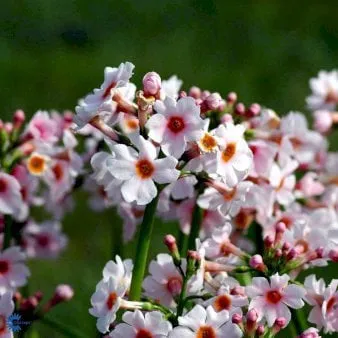
The Japanese Primula, botanically known as Primula japonica 'Apple Blossom', is a perennial plant originating from the wet meadows of East Asia. It is known for its pink flowers that appear in whorls on tall stems, which stand out beautifully against the green foliage.
The plant has large, bright green leaves that form a dense rosette at the base of the stems. It prefers moist and rich soil, making it suitable for planting in a shady and damp perennial bed, where it can be combined with other moisture-loving perennials.
With a height of 50–60 cm and a width of 20–40 cm, it is ideal for planting in groups in borders, in damp gardens or along the edges of ponds. The flowers, which have a diameter of 3–5 cm, provide an elegant and natural look to the planting.
The Japanese Primula is fully hardy in Danish conditions and can withstand frost, provided the soil does not dry out during the winter dormancy period.
- Flowering: June–July with pink flowers in whorls.
- Flower shape: Forms whorls and is a multi-tiered flowering perennial.
- Location: Thrives best in partial shade and moist soil.
- Height and width: Height 50–60 cm, width 20–40 cm.
- Hardiness: Fully hardy and ideal for Danish conditions.
Pros and cons
- Beautiful and natural flowering in pink whorls
- Thrives in moist and partially shaded areas
- Fully hardy and perennial
- Ideal for planting near ponds and in damp beds
- Requires moist soil for best flowering
- May not thrive in dry or sunny locations
Pros and cons
Pros
- Beautiful and natural flowering in pink whorls
- Thrives in moist and partially shaded areas
- Fully hardy and perennial
- Ideal for planting near ponds and in damp beds
Cons
- Requires moist soil for best flowering
- May not thrive in dry or sunny locations
Pros
- Beautiful and natural flowering in pink whorls
- Thrives in moist and partially shaded areas
- Fully hardy and perennial
- Ideal for planting near ponds and in damp beds
Cons
- Requires moist soil for best flowering
- May not thrive in dry or sunny locations
Specifications
- Botanical name: Primula japonica 'Apple Blossom'
- Plant category: Perennial
- Flowering period: June–July
- Flower colour: Pink
- Flower shape: Whorled
- Flower size: Large
- Flower shape: Forms whorls
- Flowering: Multi-tiered
- Height: 50–60 cm
- Width: 20–40 cm
- Flowering height: 35 cm
- Location: Partial shade / moist
- Best growing conditions: Partial shade, moist soil
- Hardiness: Fully hardy
- Recommended planting time: Spring
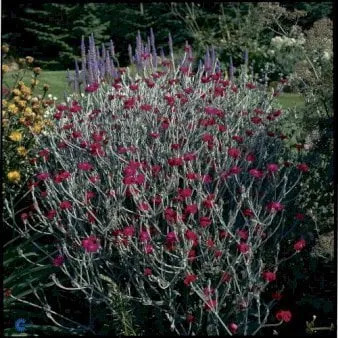
The rose campion (Lychnis coronaria) is a perennial plant that originates from the Mediterranean, known for its grey foliage and bright pink flowers. The plant forms a dense clump with grey leaves, which usually measure 1–5 cm in diameter.
The plant originates from southern Europe, preferring a dry, sunny position in the garden. It grows to a height of 50–100 cm and a width of 20–30 cm, and flowers from June to September.
The rose campion thrives in full sun and in well-drained soil. It is a hardy perennial and tolerates moderate drought, making it ideal for rock gardens and for gardeners seeking a low-maintenance and decorative plant.
With its bright pink flowers and silvery foliage, the rose campion works well as a feature in perennial beds and can also be used as a border plant.
- Origin: From southern Europe with grey foliage and dark pink flowers.
- Decorative flowers: Silvery, bright pink flowers that appear in summer.
- Hardy and easy: Thrives in full sun and tolerates moderate drought.
- Flowering period: Blooms in summer in perennial beds.
- Ideal as a border plant: The plants can be used in borders.
Pros and cons
- Originates from southern Europe with grey foliage and dark pink flowers
- Hardy and with low maintenance requirements
- Thrives in full sun and well-drained soil
- Decorative grey foliage and bright flowers in summer
- Can be used as a border plant
- Requires full sun for best flowering
- May lose its decorative value if the soil is too moist or heavy
Pros and cons
Pros
- Originates from southern Europe with grey foliage and dark pink flowers
- Hardy and with low maintenance requirements
- Thrives in full sun and well-drained soil
- Decorative grey foliage and bright flowers in summer
- Can be used as a border plant
Cons
- Requires full sun for best flowering
- May lose its decorative value if the soil is too moist or heavy
Pros
- Originates from southern Europe with grey foliage and dark pink flowers
- Hardy and with low maintenance requirements
- Thrives in full sun and well-drained soil
- Decorative grey foliage and bright flowers in summer
- Can be used as a border plant
Cons
- Requires full sun for best flowering
- May lose its decorative value if the soil is too moist or heavy
Specifications
- Botanical name: Lychnis coronaria
- Common name: Rose campion
- Category: Perennial (Family Caryophyllaceae)
- Height: 50–100 cm
- Width: 20–30 cm
- Leaf colour: Grey foliage
- Flower colour: Dark pink to magenta
- Flower shape: Simple
- Flower size: 1–5 cm
- Flowering period: June–September
- Location: Full sun
- Soil type: Well-drained
- Flowering form: Upright
- Growth form: Medium upright
- Leaf shape: Medium
- Plant type: Perennial
- Flowering distance: About 55 cm
- Use: Beds and borders, containers or in meadows, ideal for borders
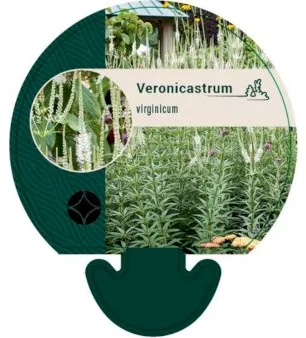
The Virginian Speedwell, botanically known as Veronicastrum virginicum, is a perennial plant that produces tall, upright spikes with densely packed flowers. The plant grows up to 120 cm in height and does not require staking, making it suitable for beds and naturalistic plantings.
It thrives best in moist and nutrient-rich soil, which supports the characteristic inflorescences in bee-friendly gardens from July to September. The flowers are densely packed in clusters, with a light and elegant appearance in the garden.
It can be combined with other perennial plants with a similar growth pattern for a lush and harmonious appearance. After flowering, the stems can be cut back to encourage new growth and maintain a tidy appearance in the garden.
The Virginian Speedwell is also known for its ability to attract butterflies, bees, and bumblebees, making it an excellent choice for those wishing to enhance biodiversity in their garden.
- Height and upright growth: Grows up to 120 cm tall with upright stems.
- Flowering period: July to September with bee-friendly flowers.
- Location: Thrives best in full sun in moist soil.
- Planting density: About 3 plants per square metre for lush growth.
- Ideal for: Suitable for borders, beds, and flower meadows.
- Decorative value: Adds structure to the garden and can be combined with other perennials.
Pros and cons
- Long flowering period in the middle of summer
- Does not require staking due to upright growth
- Attracts many beneficial insects
- Decorative even after flowering
- Requires moist soil for optimal flowering
- May be sensitive to drought in very dry areas
Pros and cons
Pros
- Long flowering period in the middle of summer
- Does not require staking due to upright growth
- Attracts many beneficial insects
- Decorative even after flowering
Cons
- Requires moist soil for optimal flowering
- May be sensitive to drought in very dry areas
Pros
- Long flowering period in the middle of summer
- Does not require staking due to upright growth
- Attracts many beneficial insects
- Decorative even after flowering
Cons
- Requires moist soil for optimal flowering
- May be sensitive to drought in very dry areas
Specifications
- Botanical name: Veronicastrum virginicum
- Danish name: Virginian Speedwell
- Plant height: approx. 120 cm
- Flower colour: Light purple
- Flowering period: July–September
- Location: Sunny, preferably moist soil
- Planting density: 3 plants per square metre
- Category: Perennial
- Plant category: Perennial plants
- Origin: Plant
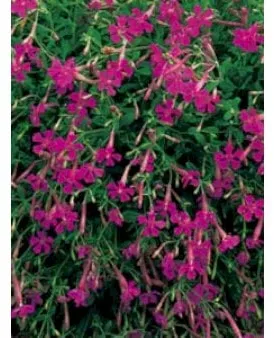
The Autumn Catchfly, botanically known as Silene schafta 'Splendens', is a beautiful, compact perennial plant that is particularly suitable for low maintenance. The plant grows to about 20 cm in height and has a dense, medium growth habit.
It thrives best in sunny locations such as flower beds and in pots, but also tolerates partial shade. The flowering lasts from August to September, when the plant is covered with pink-red flowers that stand out beautifully against the green of the leaves.
The Autumn Catchfly is ideal for rock gardens, flower beds, and as a low-maintenance plant in larger flower beds. With its dense flowering, it can also be used effectively as ground cover and provides a beautiful colour contrast in the garden.
The leaves are greenish to dark green and elongated, and the plant is very resistant to most common diseases. It requires only moderate watering and light fertilisation, making it suitable for both experienced and new gardeners.
- Flowering: August to September with pink-red flowers.
- Growth form: Compact and low-maintenance, about 20 cm high.
- Location: Sunny to partially shaded.
- Use: Ideal for rock gardens and as ground cover.
- Durability: Very hardy in Danish conditions.
Pros and cons
- Beautiful and dense flowering that decorates the garden decoratively
- Long flowering period at the end of summer
- Thrives well in the sun as well as partial shade
- Requires little care and maintenance
- Very hardy and suitable for Danish conditions
- May be damaged in very compact soil to avoid root rot
- The flowering is concentrated at the end of summer
Pros and cons
Pros
- Beautiful and dense flowering that decorates the garden decoratively
- Long flowering period at the end of summer
- Thrives well in the sun as well as partial shade
- Requires little care and maintenance
- Very hardy and suitable for Danish conditions
Cons
- May be damaged in very compact soil to avoid root rot
- The flowering is concentrated at the end of summer
Pros
- Beautiful and dense flowering that decorates the garden decoratively
- Long flowering period at the end of summer
- Thrives well in the sun as well as partial shade
- Requires little care and maintenance
- Very hardy and suitable for Danish conditions
Cons
- May be damaged in very compact soil to avoid root rot
- The flowering is concentrated at the end of summer
Specifications
- Botanical name: Silene schafta 'Splendens'
- Common name: Autumn Catchfly
- Category: Perennial / Catchfly
- Height: about 20 cm.
- Width: 20–40 cm.
- Flower colour: Pink-red
- Flower shape: Flat to pink flat
- Flower type: Single
- Flowering period: August–September
- Location: Sunny to partially shaded
- Growth form: Low-maintenance, medium growth
- Use: Rock garden, ground cover, beds and parks
- Plants per m²: about 9
- Durability: Very hardy
- Recommended planting time: March
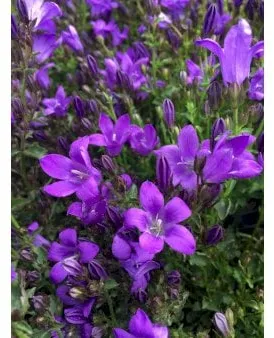
The Creeping Bellflower 'Catharina' (Campanula port. 'Catharina') is a charming, compact ground cover plant that forms a dense carpet of green leaves. It grows to about 15 cm in height and is ideal as an edge plant in borders, rock gardens, or between stones, where it can create a uniform and lush appearance.
The plant thrives best in sunny or semi-shaded locations and prefers well-drained soil. It has a long flowering period of 7–9 weeks during the summer, a feature that makes it particularly suitable for continuous garden decoration.
The plant originates from southern Europe, particularly from the Ionian Islands and Sicily, with a long tradition of cultivation in the Aegean and the Mediterranean. The many violet, bell-shaped flowers cover the plant in large quantities and add colour and life to the garden during the summer period.
The Creeping Bellflower 'Catharina' is ideal for use as an edge plant in flower beds, where it combines with soil and colour for a large part of the growing season.
- Perennial ground cover plant: Forms a dense carpet that covers the soil effectively.
- Origin: Perennial plant native to southern Europe, particularly the Ionian Islands and Sicily.
- Growing conditions: Thrives in sunny or semi-shaded areas with well-drained soil.
- Flowering period: 7–9 weeks during the summer for continuous flowering.
- Height: About 15 cm – ideal for use in borders or rock gardens.
Pros and cons
- Dense and beautiful ground cover that effectively covers the soil
- Long flowering period with continuous flowering
- Ideal for gardens and semi-shaded areas
- Attracts beneficial pollinators such as bees
- May be sensitive to very wet soil in winter
- Requires regular watering during dry summer periods
Pros and cons
Pros
- Dense and beautiful ground cover that effectively covers the soil
- Long flowering period with continuous flowering
- Ideal for gardens and semi-shaded areas
- Attracts beneficial pollinators such as bees
Cons
- May be sensitive to very wet soil in winter
- Requires regular watering during dry summer periods
Pros
- Dense and beautiful ground cover that effectively covers the soil
- Long flowering period with continuous flowering
- Ideal for gardens and semi-shaded areas
- Attracts beneficial pollinators such as bees
Cons
- May be sensitive to very wet soil in winter
- Requires regular watering during dry summer periods
Specifications
- Botanical name: Campanula port. 'Catharina'
- Common name: Creeping Bellflower 'Catharina'
- Plant height: about 15 cm
- Flowering period: 7–9 weeks during the summer
- Origin: Ionian Islands–Sicily, with a long tradition of cultivation in the Aegean–Mediterranean
- Flower colour: Violet
- Growing conditions: Sunny or semi-shaded areas
- Category: Campanula
- Plant type: Perennial plant
- Use: Flower bed
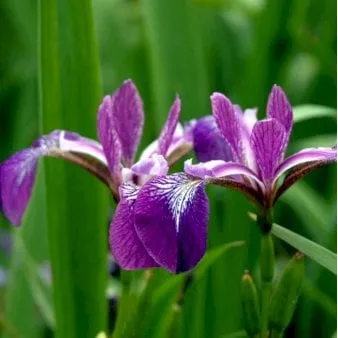
The Iris versicolor is a perennial plant that naturally grows in wet areas and along the edges of streams. It is known for its characteristic blue-purple flowers and its ability to form large, dense clumps with the passage of time.
The plant thrives well in wet or moist soil and can be planted in shallow water, where the roots and part of the stems are submerged below the surface of the water. This makes it ideal for use in ponds, stream edges, and wet garden areas.
As a perennial plant, the Iris versicolor returns every year and can be used to create a physical and lush appearance in the garden. It is also ideal for attracting wildlife and pollinators to different garden habitats.
- Scientific name: Iris versicolor
- Commonly known as: American blue flag iris or 'Blue Flag'
- Growing conditions: Thrives in wet soil and rich water environments
- Growth form: Forms large clumps with the passage of time
- Use: Ideal for ponds and wet garden areas
Pros and cons
- Thrives in wet soil and in wet areas
- Can attract wildlife and pollinators
- Ideal for physical and water-loving plantings
- Requires wet soil for optimal growth
- Not ideal for dry locations
Pros and cons
Pros
- Thrives in wet soil and in wet areas
- Can attract wildlife and pollinators
- Ideal for physical and water-loving plantings
Cons
- Requires wet soil for optimal growth
- Not ideal for dry locations
Pros
- Thrives in wet soil and in wet areas
- Can attract wildlife and pollinators
- Ideal for physical and water-loving plantings
Cons
- Requires wet soil for optimal growth
- Not ideal for dry locations
Specifications
- Botanical name: Iris versicolor
- Plant type: Perennial
- Category: Iris
- Origin: North America
- Growing conditions: Wet soil or wet areas
- Average height: 0.8 metres to 1 metre
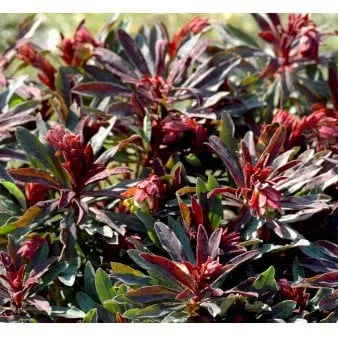
The spurge plant 'Purpurea' (Euphorbia amygdaloides 'Purpurea') is a low, perennial plant that is characterised by its red foliage and greenish-yellow flowers that appear on upright stems. The plant reaches a height of 30–50 cm and a width of 20–30 cm, forming a dense, compact growth habit.
It thrives best in shade as well as partial shade and prefers well-drained soil. The foliage has a reddish hue that provides contrast in the planting, and from April to June the plant produces small greenish-yellow flowers that add life and structure to the garden.
The spurge plant 'Purpurea' is ideal for planting in borders, in beds and as part of woodland gardens. The recommended planting density is 5–6 plants per square metre for a lush planting. The plant's sap is toxic and should be handled with care.
The plant is fully hardy and requires minimal maintenance. It can be used as a decorative plant in gardens and parks, offering colour and texture throughout the growing season.
- Red foliage: Provides colour and contrast in shaded areas.
- Perennial: Retains its foliage throughout the year in mild climates.
- Flowering period: Small greenish-yellow flowers from April to June.
- Ideal for shade and shadow: Thrives where many other plants do not.
- Toxic plant sap: Requires careful handling during planting and maintenance.
Pros and cons
- Decorative red foliage with perennial growth
- Thrives in shade and shadow
- Long flowering period from spring to summer
- Ideal for borders and planting in shaded areas
- Hardy and easy to grow in the garden
- The plant's sap is toxic and can irritate skin and eyes
- Requires well-drained soil to avoid root rot
Pros and cons
Pros
- Decorative red foliage with perennial growth
- Thrives in shade and shadow
- Long flowering period from spring to summer
- Ideal for borders and planting in shaded areas
- Hardy and easy to grow in the garden
Cons
- The plant's sap is toxic and can irritate skin and eyes
- Requires well-drained soil to avoid root rot
Pros
- Decorative red foliage with perennial growth
- Thrives in shade and shadow
- Long flowering period from spring to summer
- Ideal for borders and planting in shaded areas
- Hardy and easy to grow in the garden
Cons
- The plant's sap is toxic and can irritate skin and eyes
- Requires well-drained soil to avoid root rot
Specifications
- Botanical name: Euphorbia amygdaloides 'Purpurea'
- Common name: Spurge plant 'Purpurea'
- Plant height: 30–50 cm
- Plant width: 20–30 cm
- Planting density: 5–6 plants per sq.m.
- Flowering period: April–June
- Flower colour: Greenish-yellow
- Leaf colour: Red, reddish, red-purple
- Leaf shape: Elliptical
- Location: Shade / partial shade
- Planting conditions: Partial shade, shade
- Growth form: Upright
- Planting: Spring
- Planting type: Fully hardy
- Use: Beds, parks, borders
- Toxicity: The plant's sap is toxic
The perennial lupine 'Gallery Yellow' is a perennial plant that forms upright flower spikes with dense clusters of small flowers. The flowers appear from June to September. The leaves are palmate, with 10–25 cm long leaflets, and form a lush rosette that provides a beautiful base.
The plant grows to a height of 50–70 cm and a width of 20–40 cm. It has upright, strong stems and an upright growth habit, making it ideal for use in borders, as a background plant, or as a focal point in perennial beds.
It thrives best in the sun or in partial shade and prefers well-drained soil up to 45 cm deep to develop a good root system. The soil should be well-drained, and the plant is suitable for medium loam. It is quite hardy and ideal for beds and parks.
As part of the 'Gallery' series, this lupine is known for its compact growth and lush flowering, making it a popular choice for many types of plantings.
- Flowering: Yellow flowers 10–25 cm long from June to September.
- Flower shape: Upright and dense flower spikes with strong stems.
- Location: Thrives in the sun or in partial shade with well-drained soil up to 45 cm deep.
- Hardiness: Quite hardy and ideal for the Danish climate.
- Use: Ideal for borders, parks, and perennial beds.
Pros and cons
- Long flowering period from June to September
- Beautiful yellow flower colour that attracts pollinators
- Hardy and easy to care for perennial
- Suitable for both sun and partial shade
- Provides ecological value for pollinators
- Requires deep soil for optimal flowering
- May lose the lower leaves of the plant in very dry or heavy soil
- Should be planted with spacing to avoid fungal diseases
Pros and cons
Pros
- Long flowering period from June to September
- Beautiful yellow flower colour that attracts pollinators
- Hardy and easy to care for perennial
- Suitable for both sun and partial shade
- Provides ecological value for pollinators
Cons
- Requires deep soil for optimal flowering
- May lose the lower leaves of the plant in very dry or heavy soil
- Should be planted with spacing to avoid fungal diseases
Pros
- Long flowering period from June to September
- Beautiful yellow flower colour that attracts pollinators
- Hardy and easy to care for perennial
- Suitable for both sun and partial shade
- Provides ecological value for pollinators
Cons
- Requires deep soil for optimal flowering
- May lose the lower leaves of the plant in very dry or heavy soil
- Should be planted with spacing to avoid fungal diseases
Specifications
- Botanical name: Lupinus 'Gallery Yellow'
- Plant height: 50–70 cm
- Plant width: 20–40 cm
- Flower colour: Yellow
- Flowering period: June–September
- Flower length: 10–25 cm
- Flower shape: Upright
- Flower structure: Dense
- Flower shape: Upright
- Flowering: Dense flower spikes
- Location: Sun / partial shade
- Soil depth: Up to 45 cm
- Planting distance: Medium
- Hardiness: Quite hardy
- Use: Ideal for borders
- Use: Parks and gardens
- Category: Perennial, Lupine
Different types of houseplants
Houseplants come in many forms and colours and can be classified for rooms, windows or balconies. Here are some of the most common types.
1. Flowering houseplants
These houseplants are ideal for adding colour to your home and the long flowering period. Examples include lavender, geranium, hibiscus and jasmine. They bring life and colour to the home and are suitable for both beginners and experienced gardeners.
2. Foliage houseplants
Foliage houseplants are mainly grown for their decorative foliage. The colour, texture and patterns of the leaves are key features that add beauty and harmony to the decoration. They are ideal especially for shady spots.
3. Succulent houseplants
Succulent plants such as cacti, aloe and echeveria store water in their leaves and stems, making them resistant to drought. They are ideal for people who do not have much time to care for plants.
4. Air-purifying houseplants
Plants that purify the air, such as ivy, ficus and peace lily, help remove toxins and improve air quality. They are ideal for bedrooms, living rooms and offices.
5. Decorative flowers and houseplants
Decorative flowers such as chrysanthemums and orchids offer a variety of colours and shapes that can be used to decorate the home. They can be used as gifts or as a central element in the decoration.
Popular houseplant brands
Many growers and nurseries offer houseplants known for their quality, often with an emphasis on sustainability and local production.
Pedersen Nursery
A Danish nursery with a focus on both indoor and outdoor plants. Its range includes classic species as well as newer varieties that are suitable for Scandinavian climates.
Staudegaarden
Staudegaarden is known for its large selection of perennials and its expertise in houseplants. It offers both traditional species and rare varieties, often with environmentally friendly practices.
Plantorama
Plantorama offers a wide range of houseplants for beginners and experienced gardeners. The collection includes both classic and modern plants.
Jespers Nursery
A family-run nursery with a focus on quality and sustainability. It offers many houseplants in various sizes and price ranges, so you can find something for every home.
Frequently asked questions
What is a houseplant?
A houseplant is a plant that lives for many years, usually indoors but can also be moved outside during the summer. It can live for many years and generally requires regular care from the owner.
When should houseplants be watered?
The best time to water houseplants is in the morning or late afternoon, when the soil is moist and the temperature is lower. This allows the plants to absorb water before the heat or cold of the day.
Can houseplants be fertilised?
Yes, houseplants benefit from fertiliser when they are growing. This can be done in spring or summer, depending on the type of plant. For example, some species need more nutrients than others.
How are houseplants propagated?
Houseplants can be propagated by cutting the plant and placing it in water or directly in soil. This reproduces the plant and increases its population. Propagation usually takes three to five weeks.
Can houseplants be grown outdoors?
Yes, many houseplants grow well outdoors, especially those that are shade-tolerant. Choose a good location and make sure they are protected from direct sunlight. The plants outdoors usually need more frequent watering than indoors.