New Technologies Are Changing How We Build and Maintain Masonry

New Technologies Are Changing How We Build and Maintain Masonry
For centuries, masonry has been one of the most durable and visually appealing building methods. While bricks and mortar remain the foundation of many structures, the way we design, build, and maintain them is undergoing a major transformation. New technologies—from digital tools to advanced materials—are reshaping the construction process and redefining maintenance practices. The result is greater precision, longer-lasting structures, and a more sustainable approach to building.
Digital Tools on the Job Site
One of the most significant changes in masonry is the rise of digitalization. Where once masons relied on paper blueprints and manual measurements, today’s projects are guided by digital models and real-time data.
Building Information Modeling (BIM) allows architects, engineers, and masons to visualize an entire structure in 3D before construction begins. This collaborative approach helps identify design conflicts early, optimize material use, and reduce costly errors on site.
At the same time, digital measuring tools and laser scanners are becoming standard equipment. These technologies ensure millimeter-level accuracy when aligning walls or restoring historic facades. The result is faster work, less waste, and higher-quality outcomes.
Robotics and Automation in Masonry
Robots are no longer confined to manufacturing plants. In construction, bricklaying robots can now place thousands of bricks with remarkable speed and precision. They are especially useful on large-scale projects where repetitive patterns and straight walls make automation efficient.
For masons, this doesn’t mean the craft is disappearing—it’s evolving. Instead of spending all day with a trowel in hand, masons are increasingly becoming technical operators, managing and programming machines. This shift frees up time for more complex and creative tasks where craftsmanship remains essential.
New Materials and Sustainable Solutions
Innovation in masonry isn’t limited to technology—it’s also transforming materials. Traditional clay bricks are being joined by eco-friendly alternatives that significantly reduce carbon emissions. Some U.S. manufacturers are experimenting with recycled aggregates, bio-based binders, and modular bricks designed for easy disassembly and reuse.
Another exciting development is self-healing mortar, which contains microorganisms or chemical agents that automatically seal small cracks as they form. This extends the lifespan of masonry structures and reduces the need for frequent maintenance.
Smart Sensors and Predictive Maintenance
Masonry maintenance has traditionally relied on visual inspection—looking for cracks, moisture damage, or crumbling joints. Today, embedded sensors can continuously monitor conditions inside walls, tracking moisture levels, temperature changes, and structural movement.
These smart monitoring systems allow building managers to detect issues before they become serious. For example, early signs of moisture buildup can trigger alerts, enabling timely repairs that prevent costly damage. This proactive approach saves money, conserves resources, and enhances building durability.
Læs også:
Training and New Skill Sets
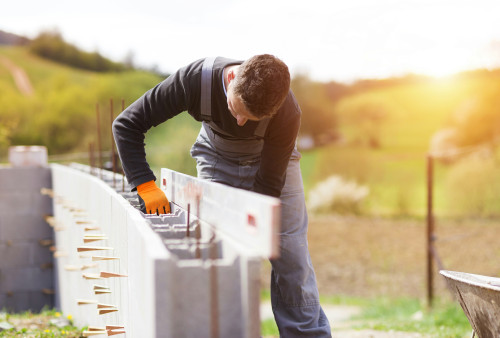
As technology advances, the skills required in masonry are changing. While hands-on experience remains vital, modern masons also need to understand digital tools, data interpretation, and collaborative workflows with engineers and software specialists.
Across the United States, trade schools and apprenticeship programs are responding by offering courses in digital construction, robotics, and sustainable materials. These programs ensure that the next generation of masons can combine traditional craftsmanship with cutting-edge technology.
The Future of Masonry: Tradition Meets Innovation
Despite all the technological progress, the core strengths of masonry—its beauty, strength, and longevity—remain unchanged. What’s new is how we achieve those qualities. With digital design, automation, and smart materials, we can now build faster, more precisely, and with a smaller environmental footprint.
The future of masonry in America will likely blend classic craftsmanship with intelligent technology, where the mason is both artisan and technician. It’s a transformation that not only changes how we build but also how we think about the built environment itself.
Læs også: